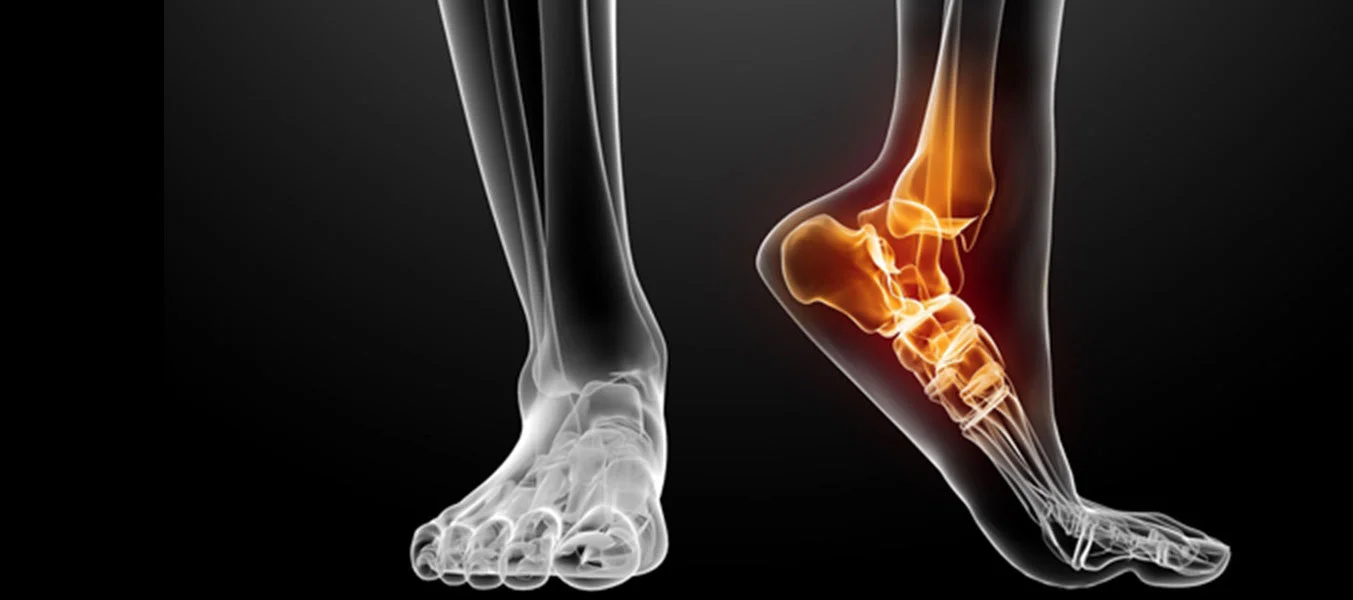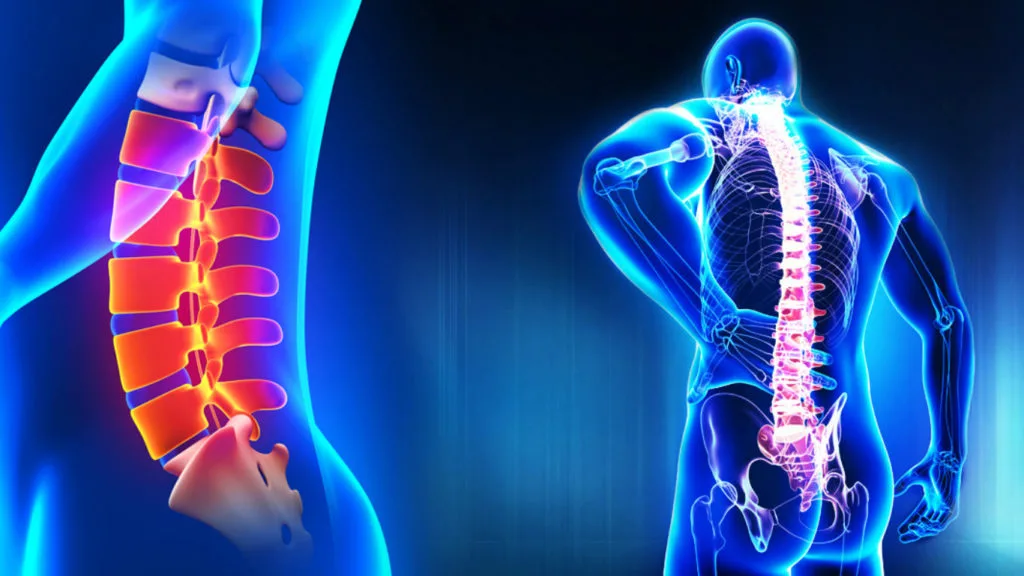
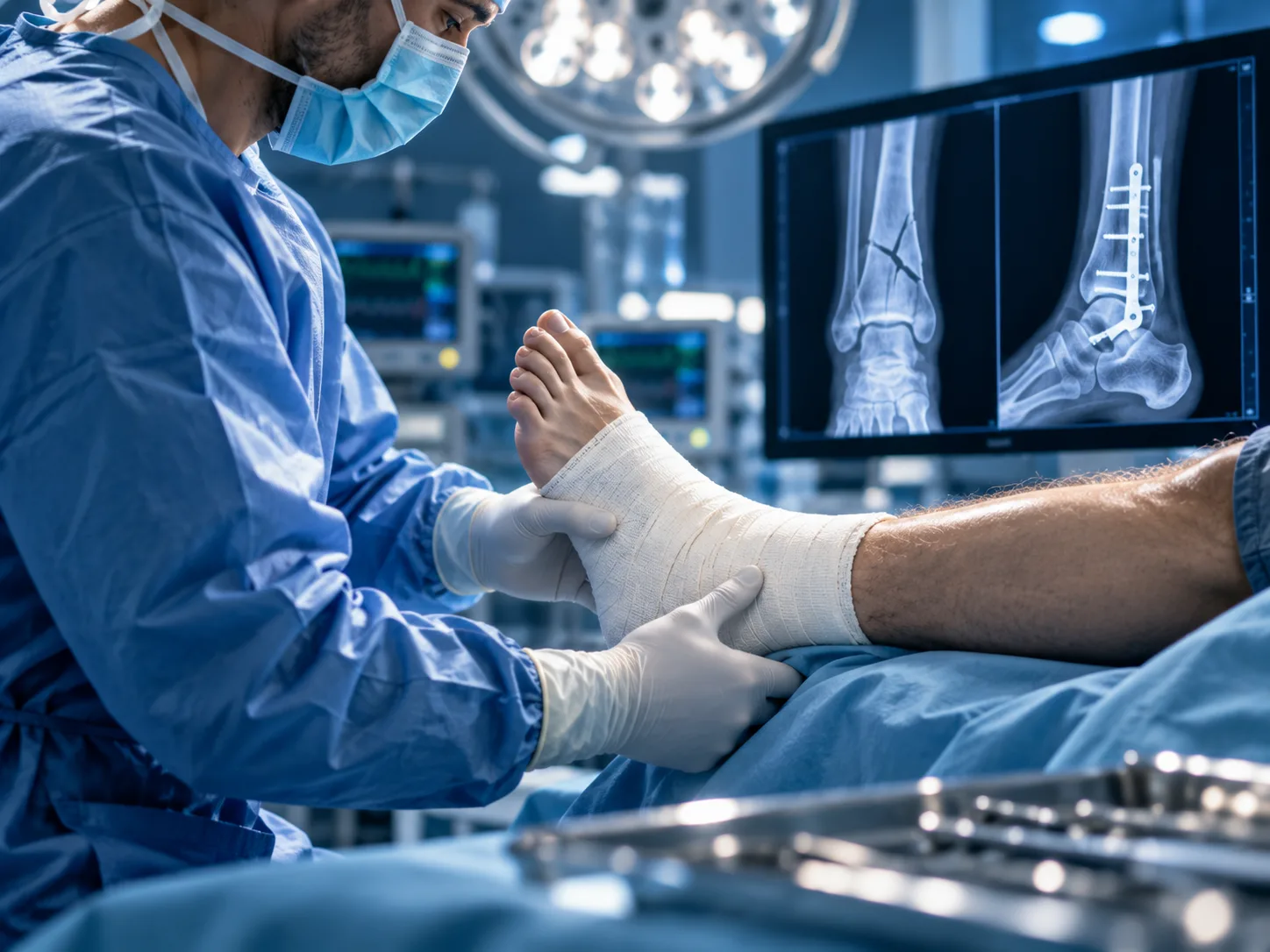
Trauma refers to an injury or damage caused by an external force acting on the human body. Orthopedic trauma focuses on injuries involving the musculoskeletal system, including bones, joints, muscles, tendons, ligaments, and associated nerves and blood vessels.
Orthopedic trauma covers a very wide spectrum, ranging from a simple fall or sprain to severe multiple injuries that may be life-threatening.
Common causes include:
- falls,
- direct blows,
- twisting injuries,
- road traffic accidents,
- workplace accidents,
- accidents at home,
- sports injuries,
- falls from height,
- crush injuries,
- gunshot injuries,
- and natural disasters such as earthquakes.
The severity of injury may vary considerably depending on the force involved and the tissues affected.
Trauma may result in:
- soft-tissue contusions,
- ligament or tendon injuries,
- joint dislocations,
- simple or complex fractures,
- open fractures,
- nerve or blood vessel injuries,
- severe crush injuries,
- and, in extreme cases, loss of a limb.
What Determines the Severity of an Orthopedic Injury?
The severity of a musculoskeletal injury depends not only on the amount of force involved but also on the patient’s age, bone quality, general health, and the mechanism of injury.
In younger individuals, fractures often result from high-energy events such as road traffic accidents, falls from height, or high-impact sports injuries.
In older adults, particularly those with osteoporosis, much lower-energy injuries may cause significant fractures.
For example, a simple fall at home may result in a fracture of the hip, wrist, or shoulder in an older person.
These are often referred to as fragility fractures and should prompt consideration not only of the fracture itself but also of the patient’s underlying bone health.
What Types of Orthopedic Injuries Can Occur After Trauma?
Different components of the musculoskeletal system may be injured either alone or in combination.
These injuries include:
- bone fractures,
- joint subluxations and dislocations (fractures may accompany),
- muscle injuries,
- tendon injuries,
- ligament injuries,
- cartilage and joint-surface injuries,
- blood vessel injuries,
- nerve injuries,
- skin and other soft-tissue injuries.
High-energy trauma may affect several bones, joints, or organ systems at the same time.
Why Is the Initial Assessment of a Trauma Patient So Important?
Following major trauma, the priority is not simply to treat a fracture.
The patient’s vital functions must first be assessed and stabilized.
Severe musculoskeletal injuries may occur together with:
- head injuries,
- chest injuries,
- abdominal organ injuries,
- spinal injuries,
- or major vascular injuries.
For this reason, severely injured patients may require treatment in a multidisciplinary trauma center involving emergency physicians, general surgeons, neurosurgeons, vascular surgeons, anesthesiologists, orthopedic trauma surgeons, and other specialists.
Even when a fracture appears dramatic, immediately life-threatening conditions must always be identified and managed first.
How Are Fractures Diagnosed?
Diagnosis begins by understanding how the injury occurred and performing a detailed physical examination.
The assessment may include:
- pain and swelling,
- deformity,
- limitation of movement,
- limb alignment and length,
- circulation,
- sensation,
- and motor function.
Plain X-rays are usually the first imaging method when a fracture is suspected.
Additional imaging may include:
- computed tomography (CT),
- magnetic resonance imaging (MRI),
- ultrasound,
- or CT angiography if a vascular injury is suspected.
CT scans are particularly valuable for assessing complex anatomical regions and fractures involving joint surfaces, and they may provide important information for surgical planning.
Does Every Fracture Require Surgery?
No.
The decision to operate is not based simply on the presence of a fracture.
Treatment depends on:
- the location of the fracture,
- fracture pattern,
- degree of fragmentation,
- displacement,
- whether a joint surface is involved,
- whether the fracture is open or closed,
- associated nerve or vascular injury,
- the patient’s age,
- bone quality,
- activity level,
- and general medical condition.
Many fractures can be treated successfully without surgery, while others are better managed surgically to restore alignment, stability, and function.
Conservative (Nonsurgical) Treatment
The goal of nonsurgical treatment is to maintain the injured area in an appropriate position while biological healing takes place.
Treatment may involve:
- a cast,
- splint,
- functional brace,
- supportive bandaging,
- or other forms of external support.
In certain fractures, displaced bone fragments can be returned to a more appropriate position without surgery. This procedure is known as closed reduction.
A cast or splint may then be used to maintain the position.
Modern fracture management aims to avoid unnecessary prolonged immobilization whenever possible.
Extended immobilization may lead to:
- joint stiffness,
- muscle wasting,
- circulatory problems,
- and loss of function.
When fracture stability and biological healing allow, controlled joint movement and weight bearing are therefore introduced at an appropriate stage.
However, rehabilitation differs significantly between fractures. Some allow early weight bearing, while others require protection until sufficient healing has occurred.
What Are the Goals of Surgery In Orthopedic Trauma?
The purpose of fracture surgery is much more than simply putting broken pieces of bone together.
Modern orthopedic trauma surgery aims to:
- restore limb length and alignment,
- reconstruct joint surfaces as accurately as possible,
- provide adequate mechanical stability,
- preserve blood supply and surrounding soft tissues,
- create an environment favorable for biological bone healing,
- allow early movement and rehabilitation when appropriate,
- and restore function.
The most appropriate surgical technique is selected according to the individual fracture.
Plate and Screw Fixation
Plate-and-screw systems are among the most widely used implants in orthopedic trauma surgery.
Modern implants are usually manufactured from biocompatible materials such as titanium or stainless steel.
A plate is positioned along the surface of the bone and secured with screws.
Different types of plates are available, including:
- conventional plates,
- locking plates,
- anatomically contoured plates.
Plate fixation can be used in many anatomical regions, ranging from small bones of the hand and foot to fractures involving the forearm, upper arm, femur, tibia, pelvis, and acetabulum.
The objective is to provide adequate stability while preserving the surrounding soft tissues and blood supply as much as possible.
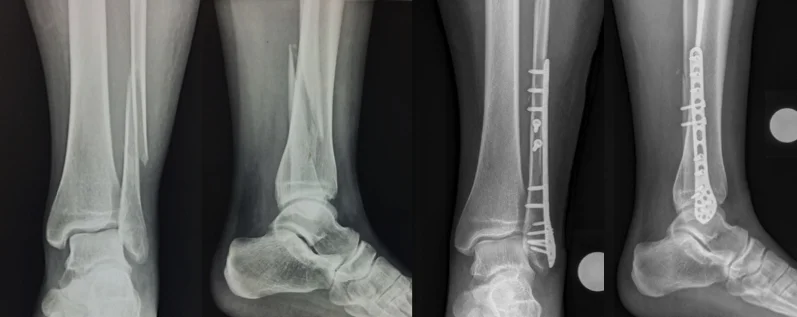
Intramedullary Nailing
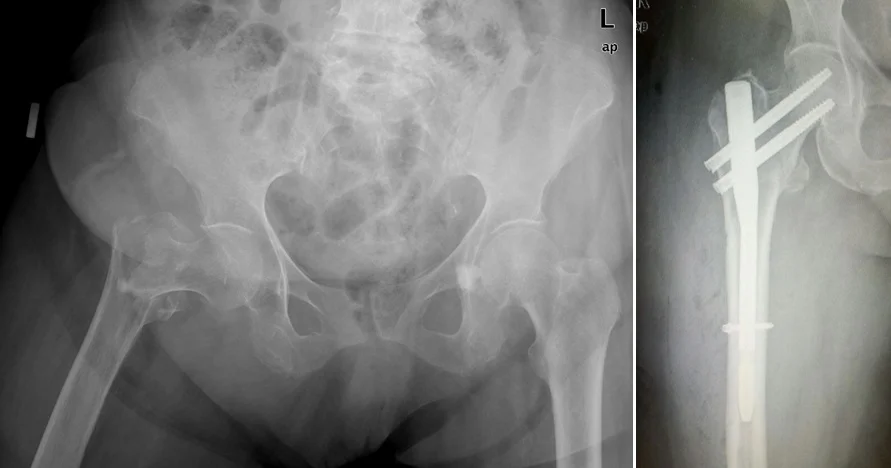
Intramedullary nailing is an important surgical technique for the treatment of many long-bone fractures.
A metal implant is inserted into the central canal of the bone and is usually secured with locking screws above and below the fracture.
Intramedullary nails are commonly used for fractures involving:
- the femur,
- tibia,
- humerus,
- forearm,
as well as certain fractures around the hip.
In suitable fractures, the procedure can often be performed through relatively small incisions without widely exposing the fracture site.
This may help preserve the surrounding soft tissues and blood supply while providing strong mechanical fixation.
Not every long-bone fracture, however, is best treated with an intramedullary nail. Plate fixation or other techniques may be preferable depending on the fracture pattern and patient characteristics.
External Fixator
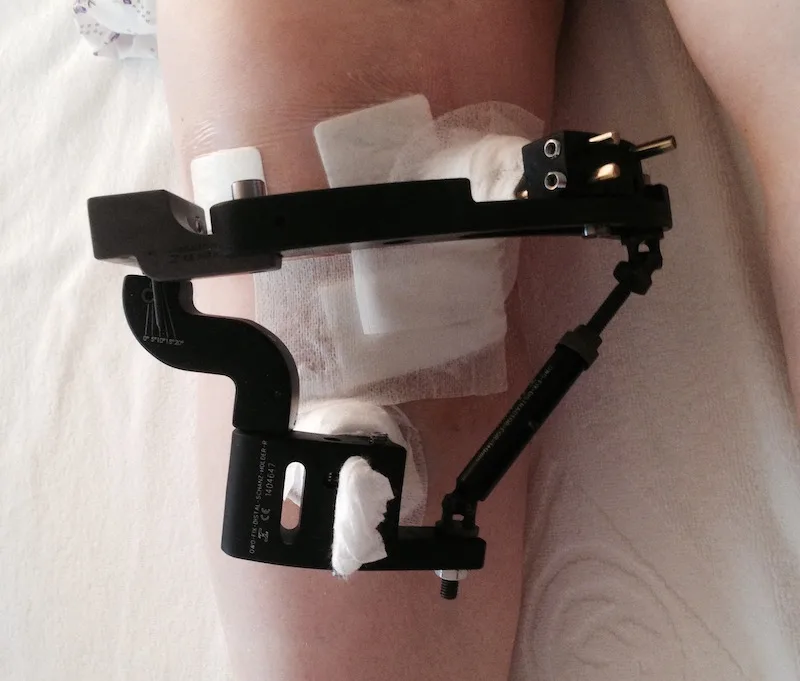
An external fixator is a system in which pins or wires inserted into the bone are connected to a frame outside the body.
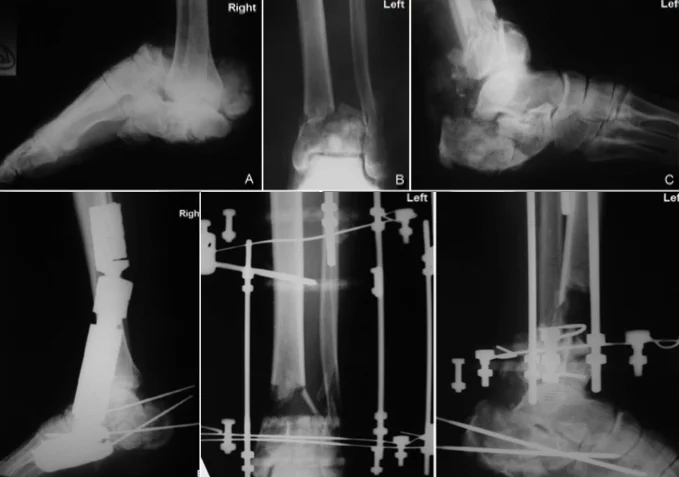
External fixation may be used in:
- severe open fractures,
- injuries with major soft-tissue damage,
- highly comminuted high-energy fractures,
- selected cases involving infection,
- temporary fracture stabilization,
- patients with multiple traumatic injuries,
- and certain pelvic injuries.
In some cases, external fixation is used temporarily until the patient’s condition or the surrounding soft tissues improve, after which more definitive internal fixation may be performed.
In other situations, an external fixator may serve as the definitive treatment.
Temporary external fixation can also form part of a treatment strategy known as damage-control orthopedics in severely injured patients.
Minimally Invasive Fracture Surgery
Modern orthopedic trauma surgery increasingly uses minimally invasive fixation techniques when appropriate.
Plates or screws may be inserted through smaller incisions while avoiding extensive exposure of the fracture site.
The aim is to preserve the fracture’s blood supply and surrounding soft tissues while still providing sufficient stability.
These techniques are not suitable for every fracture, but in appropriately selected cases they may help protect fracture biology.
Arthroscopy-Assisted Fracture Surgery
Arthroscopy can be useful in the treatment of selected fractures involving a joint surface.
A small camera placed inside the joint allows the surgeon to:
- assess the quality of joint-surface reduction,
- evaluate the position of fracture fragments,
- identify loose pieces of cartilage or bone,
- and assess associated ligament or cartilage injuries.
In selected cases, arthroscopy can be combined with fracture fixation to reduce the need for extensive joint exposure.
However, not all intra-articular fractures are suitable for arthroscopic treatment.
Joint Replacement for Fractures
In some fractures, reliable reconstruction of the damaged joint may not be possible.
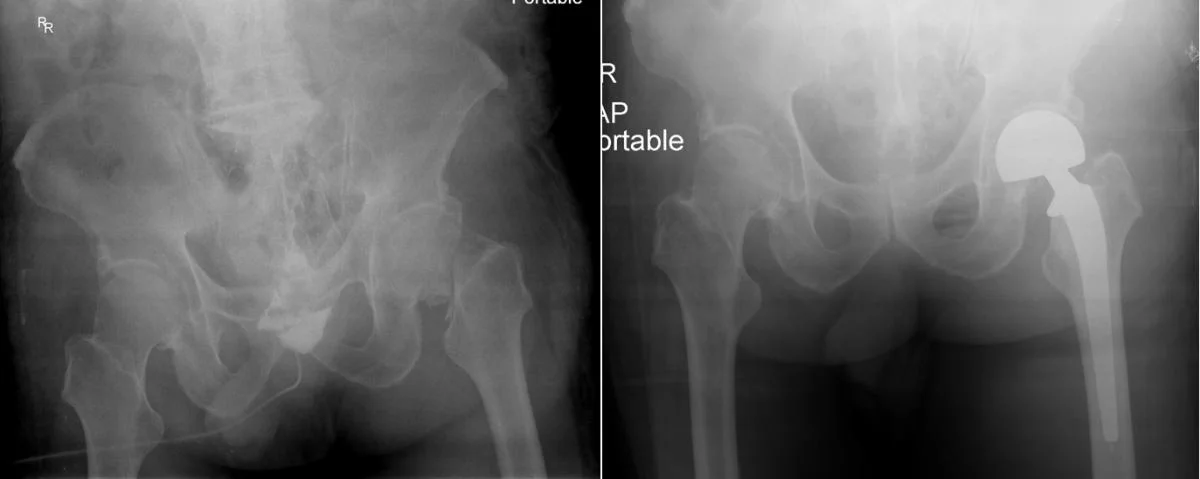
This is particularly relevant in older patients with reduced bone quality and in selected fractures involving the:
- hip,
- shoulder,
- or elbow.
In these situations, replacing part or all of the damaged joint may provide a better functional outcome than attempting to repair severely compromised bone.
A common example is a displaced femoral neck fracture in an older patient, where either partial hip replacement (hemiarthroplasty) or total hip replacement may be appropriate.
Similarly, selected complex proximal humeral fractures may be treated with shoulder replacement, including reverse shoulder arthroplasty in suitable patients.
One potential advantage of joint replacement in selected fracture patients is that it may allow earlier mobilization without waiting for fracture healing in the same way as some fixation procedures.
However, the timing and amount of weight bearing after surgery depend on:
- the fracture,
- implant or prosthesis,
- surgical technique,
- bone quality,
- and the patient’s overall condition.
What Is an Open Fracture?
An open fracture occurs when the fracture site communicates with the outside environment through a wound.
Open fractures are important injuries because of the risk of infection and associated soft-tissue damage and require urgent medical assessment.
Management may include:
- careful wound assessment,
- appropriate antibiotics,
- tetanus prophylaxis when indicated,
- surgical removal of contaminated or nonviable tissue,
- stabilization of the fracture,
- and, when necessary, soft-tissue reconstruction with plastic surgery.
The goal is not only to achieve bone healing but also to prevent infection, preserve viable tissue, and restore limb function.
Nerve and Blood Vessel Injuries In Fractures
Some fractures and dislocations can injure nearby nerves and blood vessels.
The injured limb should therefore be assessed for:
- pulses,
- circulation,
- color and temperature,
- sensation,
- and muscle function.
Certain vascular injuries that compromise circulation require urgent surgical treatment.
What Is Compartment Syndrome?
Following significant trauma, acute compartment syndrome may occasionally develop.
This occurs when pressure rises excessively within a closed muscle compartment and compromises blood flow to muscles and nerves.
Important warning signs can include pain that is much more severe than expected, progressively tense swelling, and neurological symptoms.
Acute compartment syndrome is a surgical emergency requiring prompt diagnosis and treatment.
What Complications Can Occur After a Fracture?
Although most fractures heal successfully with appropriate treatment, complications may occasionally occur.
These include:
- delayed union,
- nonunion,
- malunion,
- infection,
- joint stiffness,
- muscle wasting,
- nerve or vascular problems,
- persistent pain,
- post-traumatic osteoarthritis,
- and implant-related problems.
The risk depends on many factors including the type and severity of the fracture, age, smoking, general health, bone quality, and adherence to treatment.
Rehabilitation After Orthopedic Trauma
Fracture treatment does not end when the bone has healed on an X-ray.
An important goal is to restore the injured limb to the best possible level of function.
Rehabilitation may focus on:
- restoring joint range of motion,
- rebuilding muscle strength,
- reducing swelling,
- improving balance and coordination,
- gait training,
- and regaining independence in daily activities.
The timing of rehabilitation depends on fracture stability and the type of treatment performed.
Early but controlled and safe mobilization, when appropriate, is an important part of modern orthopedic trauma care.
When Is Urgent Medical Assessment Necessary?
Urgent medical assessment is required after trauma when there is:
- obvious deformity,
- visible bone through an open wound,
- uncontrolled bleeding,
- a pale or cold limb,
- absent pulses,
- numbness or weakness,
- rapidly increasing severe pain,
- tense and progressive swelling,
- inability to use or bear weight on the limb,
- altered consciousness,
- or difficulty breathing.
The Main Goal of Orthopedic Trauma Treatment
Modern orthopedic trauma surgery is not simply about achieving fracture union on an X-ray.
The broader goal is to:
preserve the biology of the injured tissues, restore anatomy as accurately as possible, provide appropriate stability, prevent complications, and help the patient return safely to normal function and daily life !!!