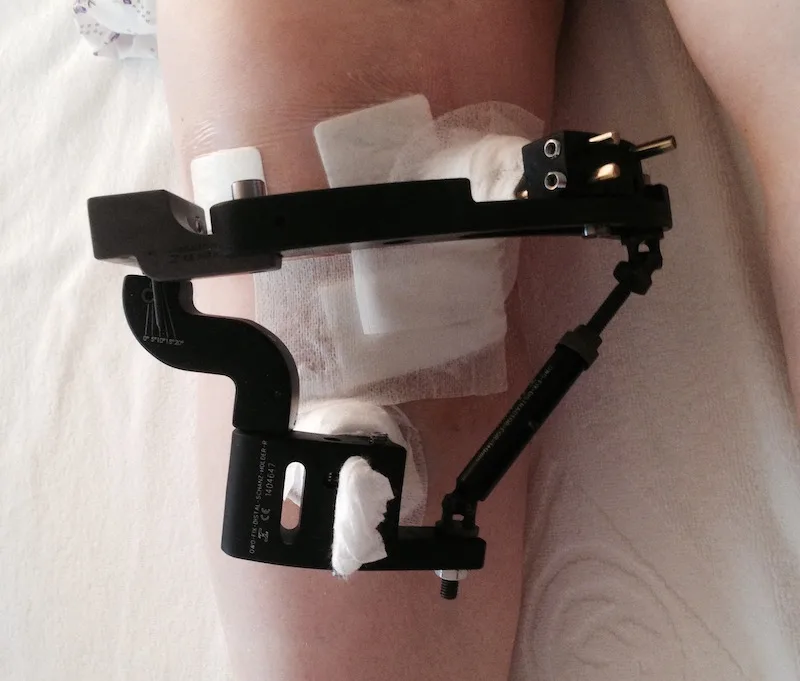
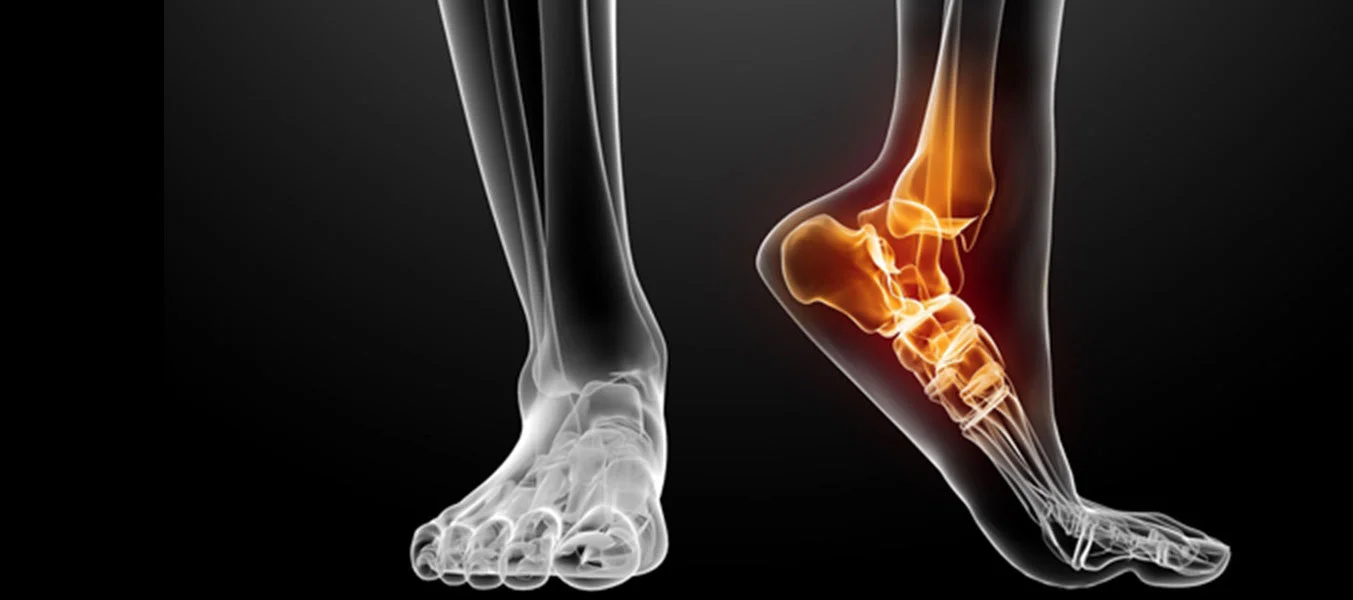
The foot and ankle are among the most anatomically and biomechanically complex regions of the human body. With every step, they must support body weight, maintain balance, adapt to the ground, and help propel the body forward during walking.
Each foot contains 26 bones, more than 30 joints, and numerous ligaments, tendons, muscles, and nerves working together as a coordinated system.
This complex structure allows the foot to be strong enough to support the body while remaining flexible enough to adapt to different surfaces.
Even a relatively small structural or functional problem can therefore affect walking, daily activities, sports participation, and overall quality of life.
Foot and ankle surgery is a specialized area of orthopedics that deals with traumatic, degenerative, congenital, developmental, and sports-related conditions affecting the foot and ankle.
How Do the Foot and Ankle Work?
The main ankle joint is the tibiotalar joint, formed by the tibia and fibula around the talus. It is primarily responsible for the upward and downward movement of the ankle.
The subtalar joint, located beneath the talus, together with other joints of the foot, contributes to side-to-side adaptation, balance on uneven surfaces, and load transfer during walking.
Muscles and tendons generate movement, while ligaments provide stability. The plantar fascia on the sole of the foot also plays an important role in supporting the arch and transmitting forces during gait.
A problem affecting any of these structures can therefore affect the biomechanics of the entire foot.
What Symptoms Can Foot and Ankle Disorders Cause?
Common symptoms include:
- foot or ankle pain,
- swelling,
- difficulty walking,
- pain during weight bearing,
- difficulty wearing shoes,
- visible deformity,
- recurrent ankle sprains,
- a feeling that the ankle is giving way,
- joint stiffness,
- heel pain,
- pain under the foot,
- numbness or burning,
- callus formation,
- and reduced sporting performance.
The location of the pain, how it started, and which activities worsen it are important clues to the underlying diagnosis.
How Are Foot and Ankle Disorders Diagnosed?
Diagnosis should not be based on an X-ray or MRI alone.
Assessment may include:
- the location and characteristics of pain,
- gait,
- alignment while standing,
- joint range of motion,
- muscle and tendon function,
- ligament stability,
- the shape of the foot arch,
- and patterns of shoe wear.
Many foot deformities should be assessed while the patient is standing and bearing weight, because some abnormalities become apparent only under load.
When necessary, imaging may include:
- weight-bearing X-rays,
- ultrasound,
- MRI,
- CT,
- or weight-bearing CT.
How Are Foot Conditions Classified?
The foot can broadly be divided into three anatomical regions:
- forefoot,
- midfoot,
- hindfoot and ankle.
This classification helps organize the many conditions that affect the foot.
Forefoot Disorders
Hallux Valgus
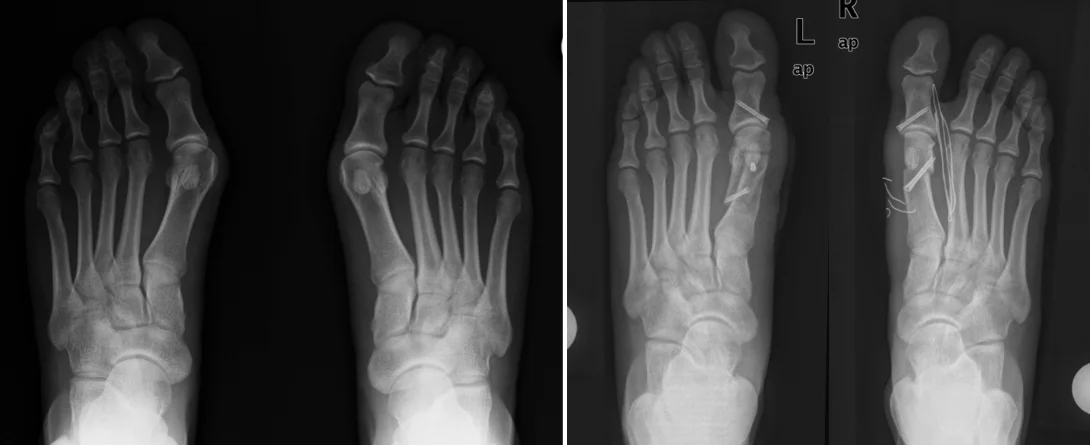
Hallux valgus, commonly known as a bunion, is a deformity in which the great toe deviates toward the smaller toes and the first metatarsal shifts in the opposite direction.
Patients may experience:
- pain around the base of the great toe,
- difficulty wearing shoes,
- redness and irritation,
- crowding of the toes,
- and secondary deformities of the lesser toes.
Not every bunion requires surgery.
Initial treatment may include:
- appropriate footwear,
- wider toe-box shoes,
- activity modification,
- and selected orthotic measures.
Surgery is generally considered because of pain and functional limitation, rather than cosmetic appearance alone.
The surgical procedure is selected based on the severity and characteristics of the deformity.
Hallux Rigidus
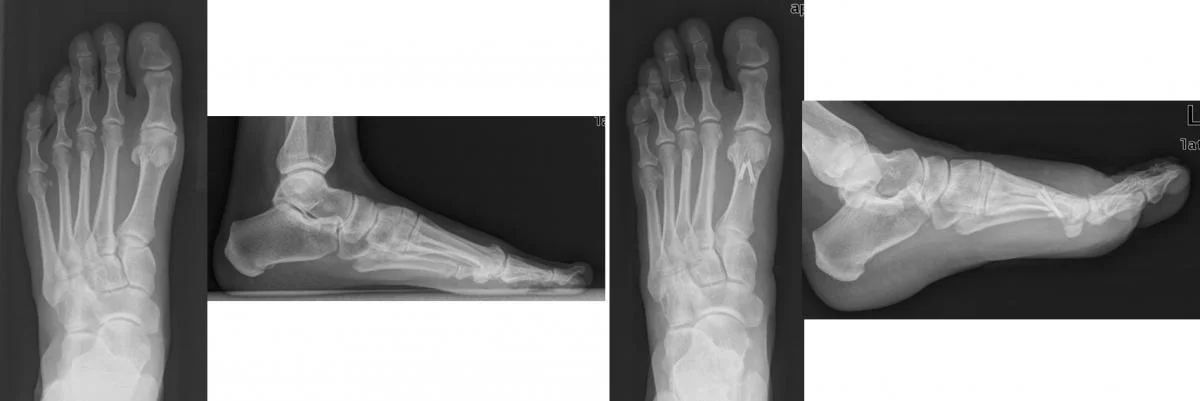
Hallux rigidus is osteoarthritis of the first metatarsophalangeal joint.
As the condition progresses, movement of the great toe—particularly upward movement—may become increasingly restricted.
Symptoms may include:
- pain at the base of the great toe,
- joint stiffness,
- pain during the push-off phase of walking,
- and a bony prominence over the joint.
Early treatment may include shoe modification, stiff-soled footwear, and selected orthoses.
More advanced disease may require surgery ranging from joint-preserving procedures to joint fusion.
Lesser Toe Deformities
The lesser toes may develop:
- hammer toe,
- claw toe,
- mallet toe,
- or crossover deformities.
These conditions can lead to pressure from footwear, calluses, and pain.
Treatment depends on whether the deformity is flexible or fixed and on the severity of the symptoms.
Morton's Neuroma
Morton's neuroma involves irritation and thickening of the tissue around an interdigital nerve, most commonly between the third and fourth metatarsal heads.
Patients may describe:
- burning pain in the forefoot,
- electric-shock sensations radiating into the toes,
- numbness,
- or a feeling of having a pebble inside the shoe.
Initial treatment may include wider footwear, metatarsal pads, activity modification, and selected injections.
Surgery may be considered when symptoms persist despite appropriate nonsurgical treatment.
Ingrown Toenail
An ingrown toenail occurs when the edge of the nail grows into the surrounding soft tissue.
It can cause pain, redness, swelling, and sometimes infection.
Mild cases may respond to nonsurgical treatment, whereas recurrent or more advanced cases may require minor surgery.
Midfoot Disorders
Metatarsalgia
Metatarsalgia is not a single diagnosis. It is a general term for pain beneath the metatarsal heads in the forefoot.
Potential causes include:
- altered foot mechanics,
- hallux valgus,
- a high-arched foot,
- repetitive overload,
- inappropriate footwear,
- and other forefoot disorders.
Therefore, successful treatment requires identifying the underlying cause rather than treating only the painful area.
Flatfoot
Flatfoot, or pes planus/planovalgus, is characterized by a reduction in the medial arch of the foot.
Flexible flatfoot is extremely common in children and is often a normal developmental variation.
In adults, the cause of flatfoot and whether the deformity is progressing are key considerations.
A painless flatfoot that does not interfere with function does not necessarily require treatment.
Progressive Collapsing Foot Deformity
The condition previously known as adult-acquired flatfoot deformity or posterior tibial tendon dysfunction is now more comprehensively described as progressive collapsing foot deformity (PCFD).
PCFD may involve not only the posterior tibial tendon but also the ligaments, joints, and overall three-dimensional alignment of the foot.
Patients may develop:
- pain along the inner side of the foot or ankle,
- loss of the medial arch,
- outward deviation of the heel,
- abduction of the forefoot,
- and difficulty standing or walking for long periods.
Early treatment may include orthoses, appropriate footwear, activity modification, and physical therapy. More advanced deformities may require various combinations of tendon, ligament, and bone procedures.
Lisfranc Injuries
Lisfranc injuries involve the midfoot tarsometatarsal joint complex and may include ligament injuries, fractures, or both.
Because they can initially resemble a simple sprain, they may be overlooked.
Severe midfoot pain, swelling, and bruising on the sole of the foot can be important warning signs.
Stable injuries may be treated nonsurgically, whereas unstable injuries may require surgical fixation or, in selected cases, fusion.
Hindfoot and Ankle Disorders
Plantar Fasciitis and Heel Pain
Plantar fasciitis is one of the most common causes of pain beneath the heel.
Pain is typically most pronounced with the first steps after getting out of bed or after sitting for a prolonged period.
Risk factors may include repetitive loading, prolonged standing, tight calf muscles, certain foot shapes, and inadequate footwear.
Most patients can be treated without surgery using:
- activity modification,
- plantar fascia and calf stretching,
- appropriate footwear,
- orthotic support when appropriate,
- and physical therapy.
Is a Heel Spur the Same as Plantar Fasciitis?
No.
A heel spur seen on an X-ray may be present in people who have no heel pain. In many patients, the pain originates from changes in and around the plantar fascia rather than from the bony spur itself.
Treatment is therefore not simply intended to remove a radiographic “spur.”
Ankle Sprains and Chronic Instability
Ankle sprains are among the most common musculoskeletal injuries.
Most involve the ligaments on the outer side of the ankle.
Inadequate rehabilitation after an initial sprain or repeated injuries can lead to chronic ankle instability.
Patients may experience:
- recurrent sprains,
- a feeling that the ankle gives way,
- poor balance,
- and lack of confidence during sports.
Rehabilitation focusing on strength, balance, and proprioception is the mainstay of treatment.
When symptomatic instability persists despite appropriate rehabilitation, ligament repair or reconstruction may be considered.
Achilles Tendon Disorders
The Achilles tendon is one of the strongest tendons in the body.
Common problems include:
- Achilles tendinopathy,
- insertional Achilles tendinopathy,
- partial tears,
- and complete Achilles tendon rupture.
The term tendinopathy is generally more appropriate than “tendinitis” for chronic disorders because inflammation is not the sole pathological process involved.
Treatment may include:
- activity modification,
- structured tendon-loading exercises,
- physical therapy,
- footwear modification,
- and surgery in selected cases.
Both surgical and nonsurgical treatment options can be considered for complete Achilles tendon ruptures, depending on the patient's age, activity level, injury characteristics, and access to appropriate rehabilitation.
Osteochondral Lesions of the Ankle
Trauma can result in osteochondral lesions, particularly on the articular surface of the talus.
Patients may have:
- persistent ankle pain,
- swelling,
- catching,
- or locking.
Treatment depends on the lesion's:
- size,
- depth,
- location,
- presence of cystic change,
- and the patient's age and activity level.
In selected cases, ankle arthroscopy and cartilage repair or restoration may be performed.
Ankle Impingement
Soft tissue or bone at the front or back of the ankle may become pinched during repetitive movement, resulting in an impingement syndrome.
This can occur particularly in football players, dancers, and other active individuals.
Treatment usually begins with nonsurgical measures. Arthroscopic surgery may be considered for selected patients with persistent symptoms.
Peroneal Tendon Disorders
The peroneal tendons on the outer side of the ankle may develop:
- tendinopathy,
- tears,
- subluxation,
- or dislocation.
These conditions may occur in association with recurrent ankle sprains.
Treatment depends on the degree of tendon damage and associated instability.
Tarsal Tunnel Syndrome
Tarsal tunnel syndrome occurs when the tibial nerve is compressed within a tunnel on the inner side of the ankle.
Symptoms may include:
- burning,
- numbness,
- tingling,
- or electric sensations extending into the sole of the foot.
Treatment depends on the underlying cause, and surgical nerve decompression may be considered in selected cases.
Foot and Ankle Osteoarthritis
Osteoarthritis can affect many joints of the foot and ankle.
Unlike hip and knee osteoarthritis, ankle osteoarthritis is frequently associated with previous:
- fractures,
- recurrent sprains,
- or ligament injuries.
Initial treatment may include:
- activity modification,
- weight management,
- appropriate footwear,
- orthoses,
- physical therapy,
- and selected injections.
For advanced disease, surgical options may include:
- arthroscopy in carefully selected situations,
- corrective osteotomy,
- joint fusion,
- or total ankle replacement.
Foot and Ankle Fractures
Fractures may involve the:
- ankle malleoli,
- talus,
- calcaneus,
- metatarsals,
- Lisfranc complex,
- or toes.
Treatment depends on fracture location, displacement, joint involvement, soft-tissue condition, and patient characteristics.
Some fractures can be managed with a cast, splint, or functional brace, whereas unstable fractures or those involving a joint surface may require surgery.
Diabetic Foot Problems
Diabetes can lead to special problems in the foot because of neuropathy, impaired circulation, and difficulties with wound healing.
The diabetic foot is therefore much more than a simple foot deformity and often requires multidisciplinary care.
Possible problems include:
- loss of sensation,
- pressure sores,
- ulcers,
- infection,
- and Charcot neuroarthropathy.
Early diagnosis and careful foot care are essential in reducing the risk of serious complications and limb loss.
Charcot Foot
Patients with severe peripheral neuropathy, particularly those with diabetes, may develop Charcot neuroarthropathy, a condition that can rapidly destroy and deform the bones and joints of the foot.
The foot may become suddenly:
- swollen,
- warm,
- and red,
while pain may be surprisingly mild because of reduced sensation.
Early recognition and protection from weight-bearing are important in limiting progression.
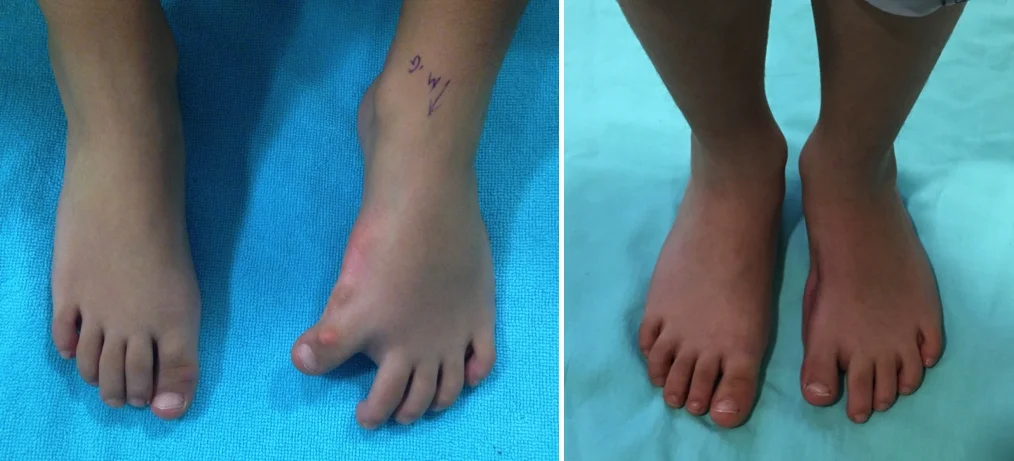
Congenital and Pediatric Foot Deformities
Children may develop conditions including:
- clubfoot,
- flatfoot,
- cavus foot,
- vertical talus,
- polydactyly,
- syndactyly,
- and other congenital foot deformities.
When evaluating pediatric foot deformities, the child's remaining growth must always be taken into account.
Nonsurgical Treatment of Foot and Ankle Conditions
Many foot and ankle problems can initially be treated without surgery.
Options may include:
- activity modification,
- appropriate footwear,
- customized or prefabricated orthoses when appropriate,
- physical therapy,
- strengthening exercises,
- stretching,
- balance and proprioception training,
- medication when indicated,
- and selected injections.
Treatment should always be directed toward the actual diagnosis. Not every patient with foot pain needs an insole, and not every deformity requires special footwear.
When Is Surgery Necessary?
Surgery may be considered when there is:
- pain that significantly limits daily activities,
- progressive deformity,
- loss of function,
- joint instability,
- significant tendon or ligament injury,
- advanced arthritis,
- a fracture or dislocation requiring stabilization,
- or persistent symptoms despite appropriate nonsurgical treatment.
The aim of surgery should not be simply to correct what appears abnormal on an X-ray.
The primary goals are to reduce pain, restore function, and, whenever possible, improve the biomechanics of the foot.
What Types of Foot and Ankle Surgery Are Performed?
Depending on the condition, treatment may involve:
- open surgery,
- minimally invasive surgery,
- arthroscopic surgery,
- tendon or ligament repair and reconstruction,
- osteotomy,
- fracture fixation,
- joint fusion,
- or joint replacement.
In some patients, several of these techniques may be combined during the same procedure.
Recovery After Foot and Ankle Surgery
Recovery varies considerably depending on the procedure performed.
Some operations allow early weight bearing, while tendon repairs, osteotomies, fusions, and certain fracture procedures may require a period of protection.
Postoperative care may include:
- wound care,
- swelling control,
- appropriate progression of weight bearing,
- range-of-motion exercises,
- strengthening,
- balance training,
- and gait rehabilitation.
The success of foot and ankle surgery therefore depends not only on the operation itself but also on appropriate postoperative rehabilitation.
When Should You See an Orthopedic Specialist?
Orthopedic evaluation may be appropriate for:
- foot or ankle pain lasting for several weeks,
- recurrent ankle sprains,
- progressive deformity,
- unexplained swelling,
- a marked reduction in walking ability,
- deformity that makes wearing shoes difficult,
- numbness or burning in the foot,
- inability to bear weight after an injury,
- or a wound or skin change in a patient with diabetes.
Obvious deformity, an open wound, impaired circulation, or an inability to bear weight after trauma may require more urgent assessment.
The Main Principle of Foot and Ankle Treatment
Successful treatment requires more than focusing on the exact point where the patient feels pain.
The alignment of the entire foot, the relationship between its joints, muscle-tendon balance, and the patient's gait should all be considered together.
The overall goal is to:
reduce pain, preserve or restore foot biomechanics, and enable the patient to walk safely, comfortably, and efficiently !!!