Arthroscopic surgery is a minimally invasive surgical technique that allows an orthopedic surgeon to visualize the structures inside a joint through small incisions and, when necessary, treat many joint disorders during the same procedure.
The word arthroscopy literally means “to look inside a joint.” During the procedure, a thin instrument called an arthroscope, which contains a camera and light source, is inserted into the joint through a small skin incision. Images from the camera are displayed on a high-definition monitor, allowing the surgeon to examine the structures inside the joint in detail.
In the past, arthroscopy was also widely used as a diagnostic procedure. Today, advances in MRI and other imaging techniques allow many joint conditions to be diagnosed before surgery. As a result, modern arthroscopy is primarily used to directly visualize a joint problem and perform the necessary treatment through minimally invasive surgical techniques.
Arthroscopy involves much more than simply looking inside the joint. Additional small incisions can be used to introduce specialized surgical instruments. These instruments allow the surgeon to repair torn tissues, reconstruct ligaments, remove loose fragments of cartilage or bone, treat cartilage lesions, and perform many other procedures.
As with other endoscopic surgical techniques, arthroscopy is performed through small portals rather than a large surgical incision.
In appropriately selected patients, this can result in less disruption of the surrounding soft tissues, smaller scars, and a more comfortable early recovery compared with certain open surgical procedures.
Arthroscopic surgery became widely known because of its frequent use in sports injuries. However, it is certainly not limited to athletes. It may be used in a wide range of patients, from professional athletes to people who do not participate in sports at all.
How Is Arthroscopic Surgery Performed?
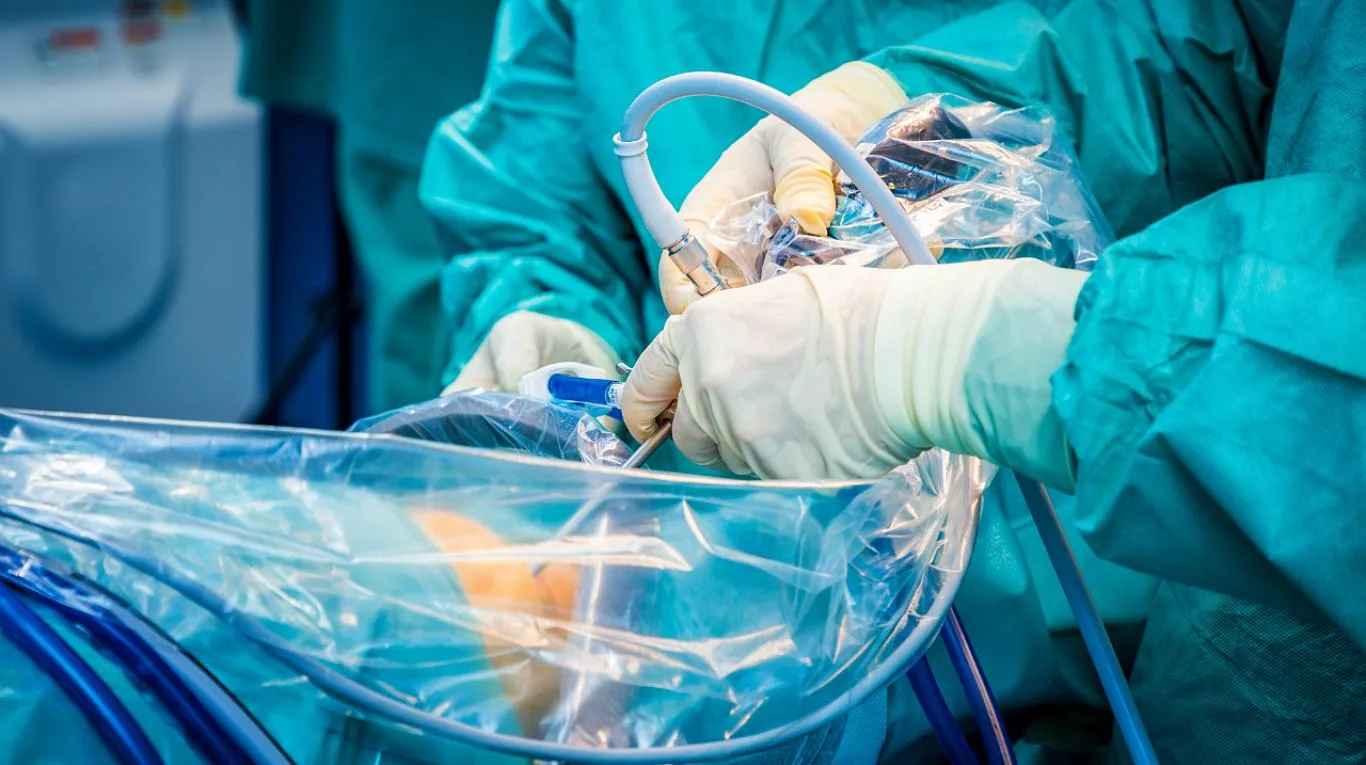
Arthroscopy is a surgical procedure and is performed in a sterile operating room under appropriate anesthesia.
The type of anesthesia depends on:
- the joint being treated,
- the procedure being performed,
- the expected duration of surgery,
- and the patient’s overall medical condition.
General anesthesia, spinal anesthesia, or regional anesthesia techniques may be used depending on the procedure.
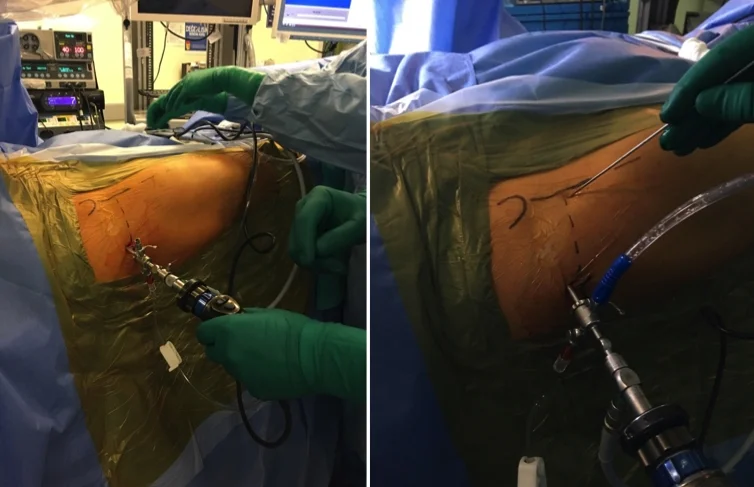
Several small incisions, usually only a few millimeters in size, are made around the joint. These entry points are called portals.
A thin camera called an arthroscope is inserted through one of the portals.
The camera magnifies the structures inside the joint and transmits the images to a monitor. This allows the surgeon to examine the articular cartilage, ligaments, menisci, labrum, portions of tendons adjacent to the joint, and other structures in detail.
During the procedure, sterile fluid is continuously introduced into the joint. This gently expands the joint space, creating room for the camera and surgical instruments and helping maintain a clear view.
Additional small instruments can then be introduced through other portals.
Depending on the procedure, these may include:
- small scissors and graspers,
- suturing and suture-passing devices,
- motorized shavers,
- radiofrequency instruments,
- burrs,
- and other specialized instruments used to reshape or repair bone and soft tissue.
The surgeon performs the procedure while viewing magnified images of the joint structures on a monitor.
One of the major advantages of arthroscopy is therefore the ability to evaluate and treat structures inside the joint under direct, magnified visualization.
What Are the Advantages of Arthroscopic Surgery?
In appropriately selected patients, arthroscopic surgery may offer several advantages compared with open surgery.
Smaller Incisions
Arthroscopic procedures are usually performed through incisions only a few millimeters in length.
As a result, surgical scars are generally smaller than those associated with traditional open procedures.
Detailed Visualization of the Joint
Modern high-definition cameras and monitors provide a magnified view of the structures inside the joint.
This is particularly useful for examining cartilage, ligaments, menisci, the labrum, and other soft-tissue structures.
Less Disruption of Surrounding Soft Tissues
Because a large incision is usually not required to gain access to the joint, muscles and surrounding soft tissues may be less disturbed.
When appropriately selected procedures are used, this may contribute to a more comfortable early recovery.
Potentially Less Postoperative Pain
Because arthroscopy is minimally invasive, postoperative pain may be less than with some comparable open surgical procedures.
However, the amount of pain depends greatly on what has actually been performed inside the joint.
For example, recovery after a relatively simple meniscal procedure is very different from recovery after ACL reconstruction or rotator cuff repair.
Early Motion and Rehabilitation
After many arthroscopic procedures, joint movement and rehabilitation can begin relatively early.
However, rehabilitation must always be tailored to the specific operation. After tissue repair procedures, movement or weight-bearing may need to be temporarily restricted to protect the healing tissue.
Shorter Hospital Stay
Many arthroscopic operations can be performed as outpatient or day-case procedures, allowing patients to return home the same day.
More extensive procedures or certain medical conditions may require an overnight stay or longer observation.
Return to Daily Activities
Many patients can return to routine daily activities relatively quickly.
However, the time required to return to work or sports depends primarily on the procedure performed and may range from a few days to several months.
Are There Risks Associated With Arthroscopic Surgery?
Although arthroscopy is performed through small incisions, it is still an operation and carries some risk.
Potential complications include:
- infection,
- bleeding or accumulation of blood within the joint,
- injury to nerves or blood vessels,
- deep vein thrombosis,
- joint stiffness,
- excessive swelling,
- problems related to surgical instruments,
- and complications specific to the procedure being performed.
Overall complication rates are generally low, but the individual risk depends on the joint involved, the extent of surgery, and the patient’s general health.
Which Joints Can Be Treated Arthroscopically?
The joints most commonly treated with arthroscopy are the knee and shoulder.
Arthroscopic surgery can also be performed in the:
- hip,
- ankle,
- elbow,
- wrist,
and, in selected cases, certain smaller joints.
The indications and procedures differ considerably from one joint to another.
Knee Arthroscopy
The knee is one of the most commonly treated joints using arthroscopic techniques.
Knee arthroscopy may be used for:
- repair of meniscal tears,
- limited removal of irreparable damaged meniscal tissue when appropriate,
- anterior cruciate ligament (ACL) reconstruction,
- selected surgical treatment of posterior cruciate ligament (PCL) and other ligament injuries,
- removal of loose pieces of cartilage or bone,
- treatment of selected cartilage lesions,
- cartilage restoration procedures for certain osteochondral defects,
- treatment of selected disorders of the synovium,
- irrigation and debridement of an infected joint in septic arthritis,
- assistance in the treatment of selected intra-articular fractures,
- and other specific intra-articular conditions.
Meniscal Tears
Modern treatment of meniscal injuries aims to preserve as much healthy meniscal tissue as possible.
When the location and type of tear, tissue quality, and patient characteristics are suitable, the meniscus can often be repaired arthroscopically with sutures.
If the tear cannot be repaired, only the unstable or damaged portion responsible for the patient’s symptoms may be removed while preserving as much normal meniscal tissue as possible.
Anterior Cruciate Ligament Injuries
Most ACL reconstructions today are performed using arthroscopic techniques.
Arthroscopy also allows the surgeon to evaluate other structures within the knee and, when necessary, treat associated meniscal or cartilage injuries during the same operation.
Cartilage Lesions
Selected focal cartilage lesions can be treated using various arthroscopic techniques.
The appropriate procedure depends on the size, depth, and location of the defect as well as the patient’s age, activity level, and other individual factors.
The Role of Arthroscopy in Knee Osteoarthritis
Arthroscopy is not routinely recommended simply to treat knee osteoarthritis.
Procedures aimed solely at washing out the joint or generally “cleaning up” degenerative cartilage have not been shown to provide reliable long-term improvement in pain or function for patients whose primary problem is osteoarthritis.
However, a patient with osteoarthritis may also have a separate mechanical problem, such as a meniscal tear, a loose body, or another treatable intra-articular condition. In these situations, whether arthroscopy is appropriate should be decided on an individual basis.
Shoulder Arthroscopy
The shoulder is another joint in which arthroscopic surgery is frequently performed.
Shoulder arthroscopy may be used in the treatment of:
- rotator cuff tears,
- selected shoulder impingement problems,
- recurrent shoulder dislocation,
- labral tears,
- shoulder instability,
- certain disorders involving the intra-articular portion of the biceps tendon,
- selected cartilage lesions,
- loose bodies,
- and some acromioclavicular joint disorders.
Rotator Cuff Tears
The rotator cuff consists of a group of muscles and tendons that are essential for shoulder movement and stability.
In appropriately selected patients, rotator cuff tears can be repaired arthroscopically using specialized sutures and anchors placed into the bone.
Shoulder Dislocation and Labral Injuries
Recurrent shoulder dislocations may result from injury to the labrum and joint capsule, which are important stabilizing structures of the shoulder.
In suitable cases, these structures can be repaired arthroscopically.
When significant bone loss is present, however, an open or alternative stabilization procedure may be more appropriate.
Hip Arthroscopy
Hip arthroscopy became widely established later than knee and shoulder arthroscopy. Nevertheless, it has become an important surgical option for selected conditions causing hip pain, particularly in young and active adults.
Common indications include:
- femoroacetabular impingement (FAI),
- labral tears,
- selected cartilage lesions,
- loose bodies,
- and certain tendon-related conditions.
Femoroacetabular Impingement
Femoroacetabular impingement occurs when structural abnormalities of the femoral head-neck junction and/or acetabulum result in abnormal contact during hip movement.
It can cause groin or hip pain, particularly in young and active individuals.
In appropriately selected patients, hip arthroscopy can be used to reshape the bone responsible for the impingement and repair associated labral injuries.
Hip arthroscopy, however, is not a treatment for advanced osteoarthritis. Patients with substantial cartilage loss generally obtain less benefit from arthroscopic procedures.
Ankle Arthroscopy
Ankle arthroscopy can be used for a variety of intra-articular disorders.
Common indications include:
- anterior or posterior ankle impingement,
- osteochondral lesions of the talus,
- loose bodies,
- synovitis,
- intra-articular problems associated with certain ligament injuries,
- selected intra-articular fractures,
- and other specific joint disorders.
In some procedures, arthroscopy may be combined with open surgical techniques.
Wrist Arthroscopy
The wrist is a small and anatomically complex joint. Modern small-diameter arthroscopes allow many structures within the wrist to be visualized directly.
Wrist arthroscopy may be used for:
- triangular fibrocartilage complex (TFCC) injuries,
- wrist ligament injuries,
- selected cartilage lesions,
- loose bodies,
- certain ganglion cysts,
- and the assessment or treatment of selected wrist fractures.
Endoscopic carpal tunnel release, although also performed through small incisions with the aid of a camera, is a different procedure and is not the same as intra-articular wrist arthroscopy.
Elbow Arthroscopy
Elbow arthroscopy may be used for:
- removal of loose bodies,
- removal of bone spurs that limit elbow motion,
- treatment of certain synovial disorders,
- selected cartilage and osteochondral lesions,
- assistance in the assessment or treatment of certain intra-articular fractures,
- and surgical treatment of selected cases of elbow stiffness.
Because several major nerves and blood vessels lie close to the elbow joint, elbow arthroscopy is a technically demanding procedure that requires particular care and experience.
Recovery After Arthroscopic Surgery
Recovery after arthroscopic surgery varies considerably depending on the procedure performed.
After a relatively simple intra-articular procedure, a patient may return to everyday activities fairly quickly. In contrast, procedures such as ligament reconstruction, meniscal repair, rotator cuff repair, or labral repair may require several weeks to months of structured rehabilitation while the repaired tissue heals.
For this reason, the idea that “arthroscopic surgery is a small operation because the incisions are small” is not always correct.
Small incisions can reduce surgical trauma, but the length and complexity of recovery are determined primarily by what has been repaired or reconstructed inside the joint.
Successful arthroscopic treatment depends on four important factors:
the right patient, the correct diagnosis, appropriate surgical technique, and a well-planned rehabilitation program!!!