Hand and upper extremity surgery is a specialized field of orthopedics dealing with conditions and injuries affecting the bones, joints, muscles, tendons, ligaments, nerves, and blood vessels of the hand, wrist, forearm, elbow, and upper arm.
The hand is one of the most anatomically and functionally complex parts of the human body.
Activities such as gripping, holding objects, writing, performing fine motor tasks, and carrying out daily activities require the coordinated function of numerous small joints, tendons, muscles, and nerves.
The role of the hand is not purely mechanical. It is also essential for communication, work, art, sport, and personal independence.
For this reason, even a seemingly minor hand problem may lead to significant functional impairment if it is not diagnosed and treated properly.
What Conditions Are Treated in Hand and Upper Extremity Surgery?
This field includes a broad range of problems such as:
- fractures and dislocations,
- tendon injuries,
- ligament injuries,
- nerve compression and nerve lacerations,
- vascular injuries,
- crush injuries,
- amputations,
- congenital differences,
- osteoarthritis,
- tendon disorders,
- ganglion cysts,
- Dupuytren disease,
- sports and overuse injuries,
- infections,
- tumors,
- and post-traumatic deformity or loss of function.
Why Are Hand Injuries Special?
A large number of important structures are located within a very small anatomical space.
A single laceration may simultaneously cause:
- a tendon,
- nerve,
- blood vessel,
- muscle,
- or bone.
The visible size of the skin wound therefore does not necessarily reflect the severity of the underlying injury.
Accurate diagnosis and early treatment are particularly important in hand trauma.
Traumatic Injuries
Trauma to the hand and upper extremity is common at home, at work, during sports, and in road traffic accidents.
Common injuries include:
- finger and hand fractures,
- wrist fractures,
- forearm fractures,
- elbow fractures,
- humeral fractures,
- joint dislocations,
- tendon lacerations,
- ligament injuries,
- nerve injuries,
- vascular injuries,
- crush injuries,
- soft-tissue loss,
- and amputations.
Treatment may be nonsurgical or surgical, depending on the type and severity of the injury.
What Is Microsurgery?
Microsurgery uses magnification and specialized instruments to repair very small nerves and blood vessels.
In hand surgery, it is particularly useful for:
- nerve repair,
- vascular repair,
- replantation,
- and free tissue transfer.
When a finger or limb is completely or partially amputated, replantation may be possible in selected patients by repairing the bone, tendons, arteries, veins, and nerves.
Not every amputation is suitable for replantation.
The decision depends on:
- the level of injury,
- degree of tissue damage,
- ischemia time,
- patient age,
- general health,
- and expected functional outcome.
Tendon Injuries
Finger and wrist motion depends on numerous flexor and extensor tendons.
Tendon injuries may result from lacerations, sports injuries, or trauma.
Treatment depends on:
- the location,
- tendon involved,
- extent of injury,
- and associated nerve or vascular damage.
Structured hand rehabilitation after tendon repair is essential.
Even after technically successful surgery, inadequate rehabilitation can lead to adhesions, stiffness, or tendon rerupture.
Hand and Wrist Fractures
Common fractures include:
- phalangeal fractures,
- metacarpal fractures,
- scaphoid fractures,
- distal radius fractures,
- and other carpal fractures.
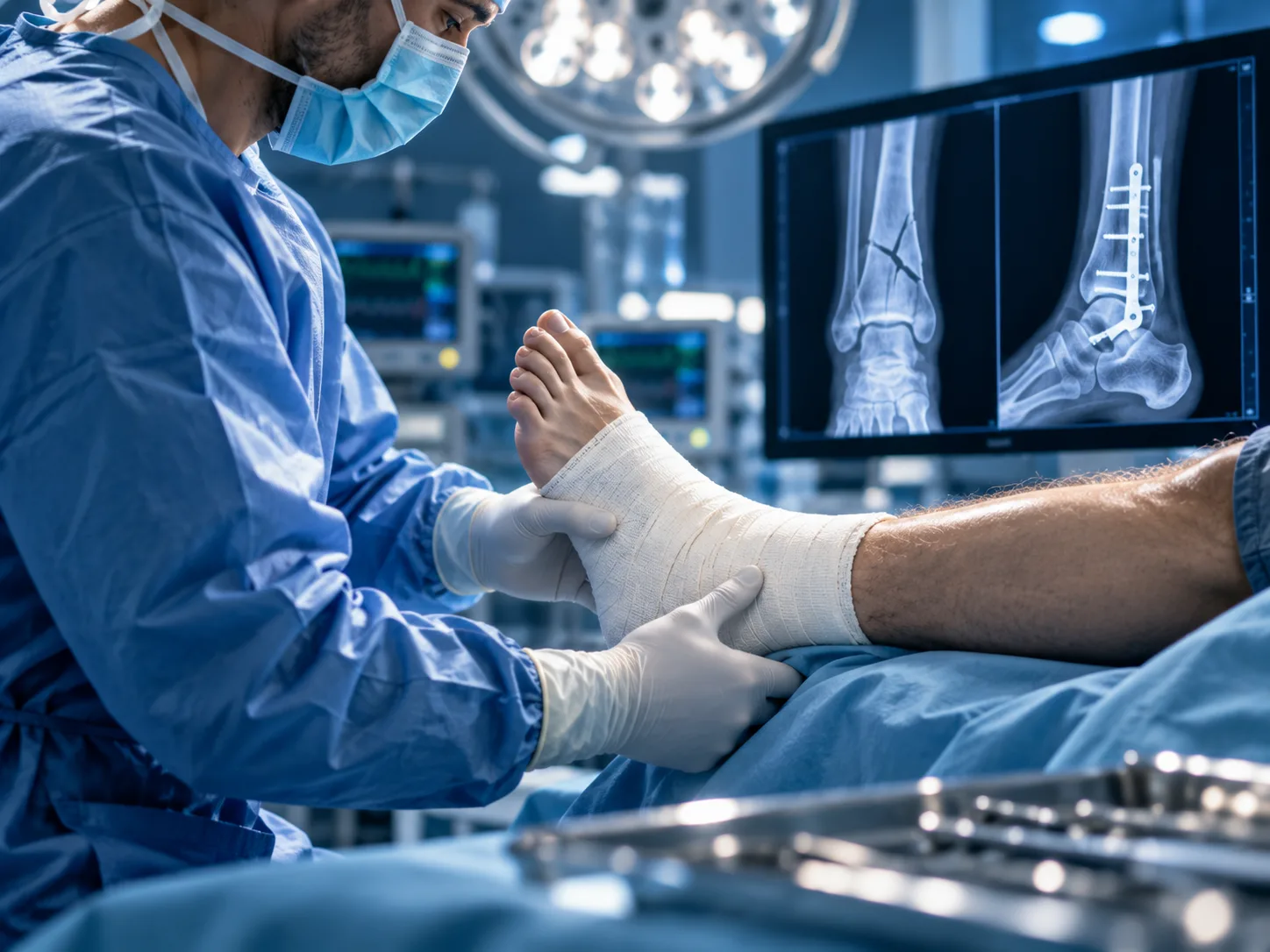
Many can be treated with a splint or cast.
Surgery may be required when a fracture is:
- significantly displaced,
- intra-articular,
- unstable,
- open,
- or associated with nerve, tendon, or vascular injury.
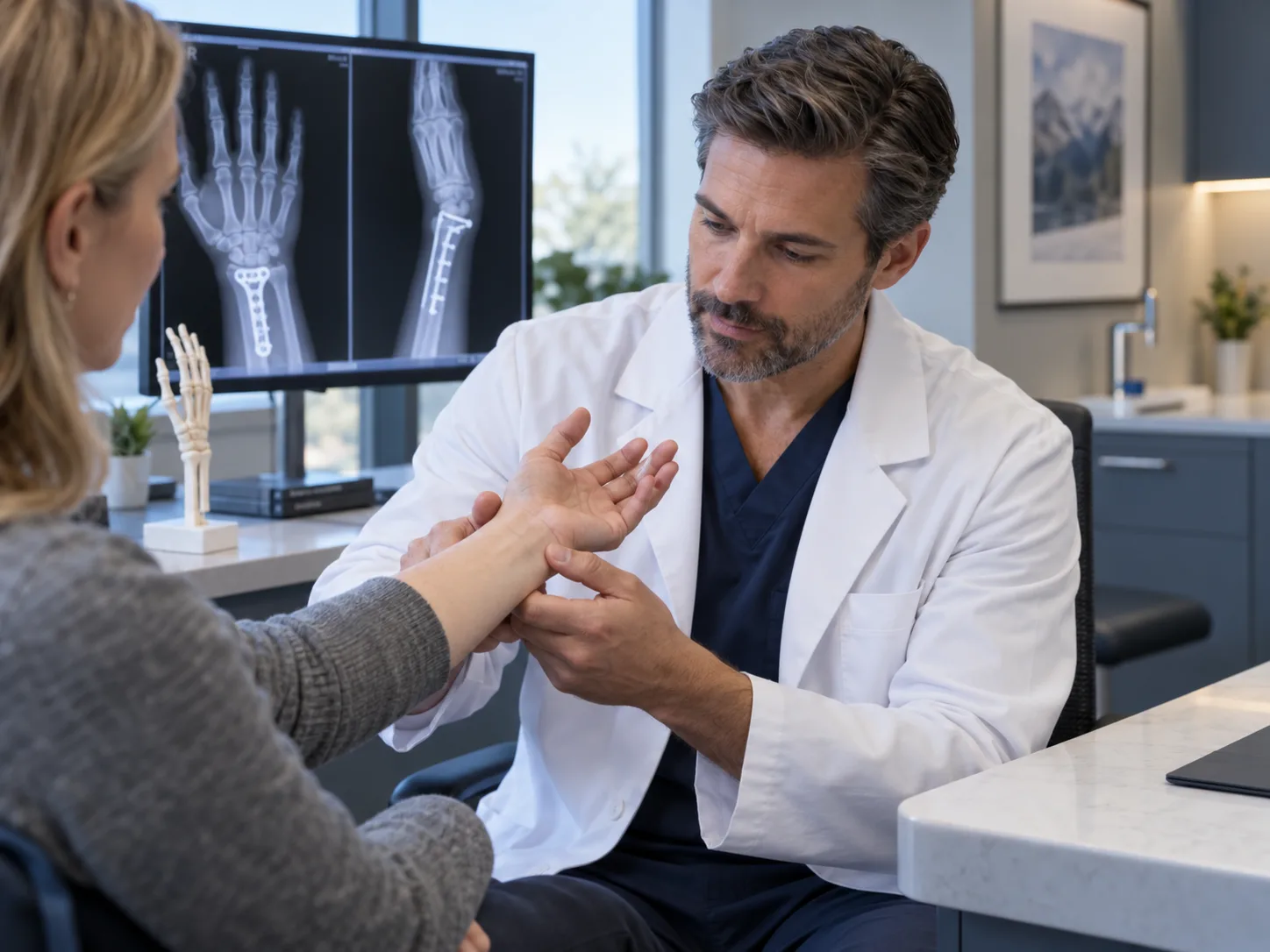
Surgical fixation may involve:
- plates and screws,
- K-wires,
- specialized screws,
- or external fixation.
Carpal Tunnel Syndrome
Carpal tunnel syndrome occurs when the median nerve is compressed as it passes through the carpal tunnel at the wrist.
The median nerve provides sensation to much of the:
- thumb,
- index finger,
- middle finger,
- and part of the ring finger,
and supplies important muscles involved in thumb function.
Common symptoms include:
- numbness,
- tingling,
- night pain,
- electric sensations,
- dropping objects,
- and, in advanced cases, weakness of the thumb muscles.
Symptoms may sometimes extend into the forearm.
Mild or early disease may be treated with:
- night splinting,
- activity modification,
- and selected injections.
Patients with significant nerve compression or persistent symptoms despite nonsurgical treatment may need carpal tunnel release.
This may be performed using an open or endoscopic technique.
In advanced, long-standing compression, surgery can relieve pressure on the nerve but may not completely reverse established sensory loss or muscle atrophy.
Ulnar Nerve Compression – Cubital Tunnel Syndrome
The ulnar nerve is most commonly compressed around the inner side of the elbow in the cubital tunnel.
Patients may experience:
- numbness in the ring and little fingers,
- tingling,
- hand weakness,
- difficulty with fine motor tasks.
Advanced compression may result in wasting of the small muscles of the hand.
Initial treatment may involve:
- avoiding prolonged elbow flexion,
- changing sleeping position,
- activity modification.
Progressive weakness or significant nerve compression may require surgical decompression.
In selected cases, the nerve may be moved to a new position through an anterior transposition procedure.
Trigger Finger
Trigger finger develops when a flexor tendon can no longer glide smoothly through its tendon sheath, most commonly due to narrowing of the A1 pulley.
Patients may notice:
- tenderness in the palm,
- catching,
- clicking,
- or locking of the finger.
Any finger, including the thumb, may be affected.
Treatment may include:
- activity modification,
- splinting,
- corticosteroid injection,
- and surgical release when necessary.
During surgery, the A1 pulley is released to allow the tendon to glide freely.
De Quervain Tenosynovitis
De Quervain tenosynovitis affects two tendons on the thumb side of the wrist.
The tendons become irritated as they pass through a relatively tight tendon compartment.
Pain may be triggered by:
- thumb movement,
- gripping,
- lifting,
- repetitive hand use,
- or carrying a baby.
Treatment may include:
- activity modification,
- thumb-spica splinting,
- corticosteroid injection.
Persistent cases may require surgical release of the tendon compartment.
Ganglion Cysts
Ganglion cysts are among the most common benign lumps of the hand and wrist.
They typically arise from a joint or tendon sheath and contain a thick, jelly-like fluid.
They most commonly occur on the back of the wrist but may also appear on the palm side or around the fingers.
Ganglion cysts may:
- increase or decrease in size,
- disappear spontaneously,
- remain painless,
- or cause discomfort with movement.
They are not malignant tumors.
Asymptomatic cysts often require no treatment.
Aspiration or surgical excision may be considered when the cyst is painful, limits function, or raises diagnostic uncertainty.
Dupuytren Disease
Dupuytren disease is a condition in which the palmar fascia gradually thickens and shortens.
Small nodules may initially develop in the palm.
Over time, firm cords may extend toward the fingers, causing them to bend toward the palm.
The ring and little fingers are most commonly affected.
Not every patient requires treatment.
Mild disease without functional limitation can be observed.
When significant contracture develops, treatment options may include:
- needle fasciotomy,
- enzyme injection where available,
- or surgical fasciectomy.
Hand therapy and rehabilitation are important after treatment.
Recurrence may occur over time.
Tennis Elbow
Lateral epicondylitis, commonly known as tennis elbow, is associated with chronic overuse changes at the common extensor tendon’s origin on the lateral side of the elbow.
Although historically described as an inflammatory condition, chronic disease is now understood largely as a tendinopathy characterized by degenerative tendon changes.
It is also common among people who do not play tennis.
Symptoms may include:
- pain on the outer side of the elbow,
- pain with gripping,
- discomfort when lifting objects,
- pain with repetitive wrist use.
Initial treatment usually includes:
- activity modification,
- structured exercise,
- physical therapy,
- ergonomic adjustment.
PRP and other injection treatments may be considered in selected chronic cases, but they should not be presented as universally successful.
Surgery is reserved for a small group of patients with persistent symptoms despite prolonged appropriate nonsurgical treatment.
Golfer's Elbow
Medial epicondylitis affects the flexor-pronator tendon origin on the inner side of the elbow.
It is not limited to golfers.
Treatment usually begins with:
- activity modification,
- exercise,
- physical therapy.
Injection or surgical treatment may be considered in persistent cases.
TFCC Injuries
The triangular fibrocartilage complex (TFCC) is an important stabilizing structure on the little-finger side of the wrist.
It may be injured through trauma or repetitive loading.
Symptoms may include:
- ulnar-sided wrist pain,
- pain with rotation,
- clicking,
- weakness during gripping.
Treatment may include:
- splinting,
- activity modification,
- rehabilitation,
- injection,
- or wrist arthroscopy in selected cases.
Wrist Arthroscopy
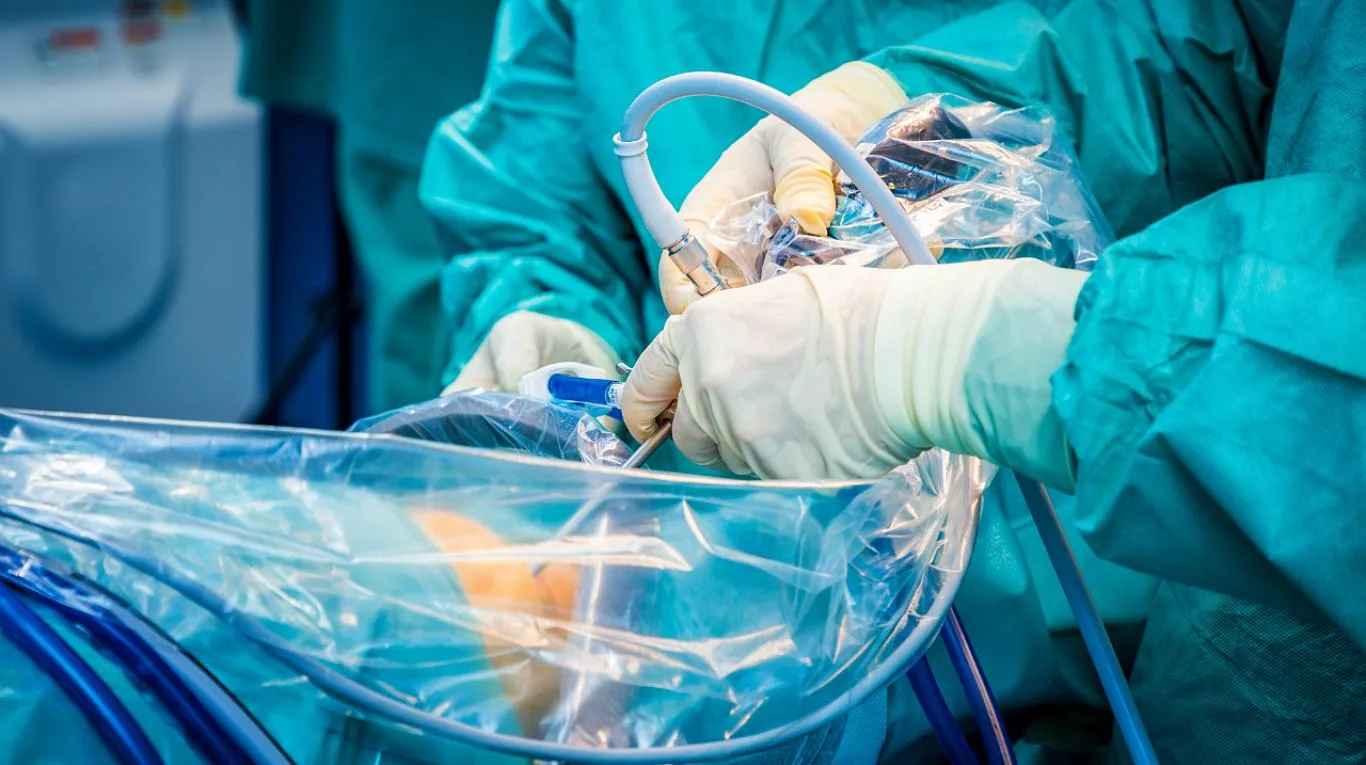
Wrist arthroscopy uses a small camera and specialized instruments introduced through small incisions.
It can be used for:
- TFCC injuries,
- selected ligament injuries,
- cartilage lesions,
- loose bodies,
- certain ganglion cysts,
- and selected wrist fractures.
Elbow Arthroscopy
Elbow arthroscopy may be used for:
- removal of loose bodies,
- treatment of selected cartilage lesions,
- release of some forms of stiffness,
- removal of bone spurs,
- and other selected intra-articular problems.
Because important nerves and blood vessels lie close to the elbow, the procedure requires particular technical expertise.
Hand and Wrist Arthritis
Osteoarthritis may affect the hand and wrist because of:
- aging,
- previous trauma,
- inflammatory disease.
Osteoarthritis of the thumb carpometacarpal (CMC) joint is particularly common.
Initial treatment may include:
- activity modification,
- splinting,
- medication,
- injection,
- and hand therapy.
Advanced disease may be treated with procedures such as:
- fusion,
- arthroplasty,
- trapeziectomy,
- or reconstructive surgery.
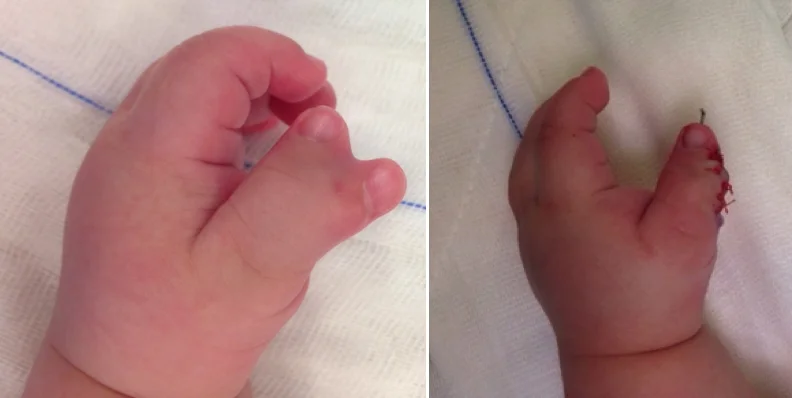
Congenital Hand and Upper Extremity Differences
Congenital conditions include:
- polydactyly,
- syndactyly,
- thumb duplication,
- limb deficiencies,
- and various bone or tendon abnormalities.
Treatment is planned primarily to maximize function rather than appearance alone.
Growth and development are important considerations in determining the timing of surgery.
Tendon Transfers
In certain neurological conditions or nerve injuries, specific muscle functions may be lost.
A functioning tendon can sometimes be redirected to restore a missing movement.
This is known as a tendon transfer.
Tendon transfers may be used for:
- peripheral nerve injuries,
- brachial plexus disorders,
- neuromuscular conditions,
- post-traumatic loss of function.
Hand Therapy and Rehabilitation
The success of hand surgery depends not only on the surgical procedure itself.
Hand therapy is essential for:
- preserving range of motion,
- preventing tendon adhesions,
- improving strength,
- controlling swelling,
- restoring sensation and fine motor function.
Some procedures require very early controlled movement, whereas tendon or ligament repairs may require temporary protection.
Rehabilitation must therefore be individualized according to the procedure performed.
When Is Urgent Assessment Required?
Urgent medical assessment is important for:
- deep lacerations,
- complete or partial amputation,
- severe crush injury,
- active bleeding,
- pale or cold fingers,
- loss of sensation,
- inability to move a finger,
- obvious deformity after trauma,
- rapidly increasing swelling,
- or signs of infection.
It is important to remember that, especially in cases of injuries caused by sharp objects, there may be damage to tendons, nerves, or blood vessels even if the skin wound is small.
The Main Goal of Hand and Upper Extremity Surgery
The goal is not simply to repair anatomy.
The broader aim is to:
reduce pain, preserve or restore movement and sensation, improve grip and fine motor function, and help the patient return to daily life with the greatest possible independence !!!