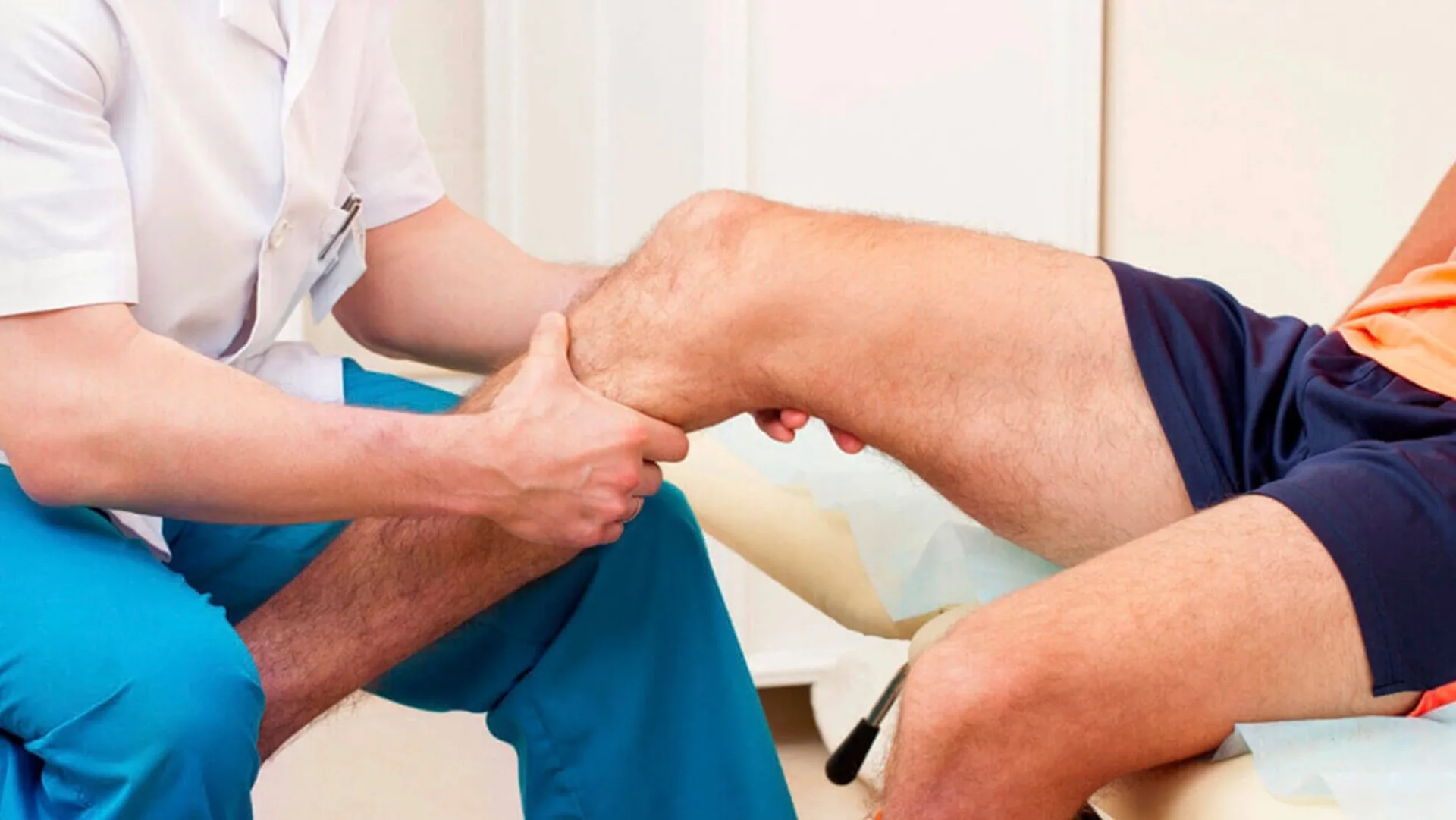
Sport and regular exercise improve physical fitness, strengthen the musculoskeletal system, enhance cardiovascular capacity, and are an important part of a healthy lifestyle. However, sports participation can also result in injuries involving the muscles, tendons, ligaments, joints, bones, and other tissues.
Sports injuries are not limited to professional athletes. They may also occur in recreational athletes, people who exercise regularly, and individuals who participate in sports only occasionally.
Some injuries result from direct contact, a fall, or a sudden traumatic event, while others develop gradually because of repetitive loading and overuse.
Insufficient physical preparation, inadequate warm-up, sudden increases in training load, muscle weakness or imbalance, poor technique, inadequate recovery, and previous injuries may all contribute to the risk of sports-related injury.
Which Parts of the Body Are Most Commonly Injured?
The areas affected vary according to the type of sport, although injuries of the lower extremities are particularly common.
Frequently injured regions include the:
- knee,
- ankle,
- foot,
- hip and groin,
- thigh,
- shoulder,
- elbow,
- hand and wrist,
- and spine.
Contact sports may also be associated with injuries involving the head and face, including sports-related concussion.
How Do Sports Injuries Occur?
Sports injuries can broadly be divided into two categories.
Acute Injuries
Acute injuries occur suddenly as a result of trauma.
Examples include:
- ankle sprains,
- anterior cruciate ligament tears,
- shoulder dislocations,
- muscle tears,
- tendon ruptures,
- meniscal tears,
- and fractures sustained during sporting activity.
Patients can often identify the exact moment when the injury occurred, and symptoms usually begin suddenly.
Overuse Injuries
Overuse injuries may develop without a single major traumatic event.
They occur when repetitive loading exceeds the tissue’s ability to recover and adapt.
This may lead to:
- tendinopathy,
- stress fractures,
- chronic muscle-tendon problems,
- certain cartilage lesions,
- and activity-related joint pain.
A rapid increase in training intensity or volume may contribute to the development of these conditions.
Common Sports Injuries
Knee Injuries
The knee is one of the most commonly injured joints during sports.
Meniscal Tears
The menisci are important structures within the knee that contribute to load distribution, shock absorption, and joint stability.
Meniscal tears may occur during twisting, pivoting, deep flexion, or sudden changes of direction.
Treatment depends on the type and location of the tear, the patient’s age, sporting expectations, tissue quality, and associated injuries.
Whenever possible, modern treatment aims to preserve and repair the meniscus rather than remove it.
Anterior Cruciate Ligament Injuries
The anterior cruciate ligament (ACL) is one of the main stabilizing ligaments of the knee.
ACL injuries are particularly common in sports involving:
- rapid changes of direction,
- pivoting,
- jumping and landing,
- and sudden deceleration.
Football, basketball, handball, volleyball, and skiing are common examples.
Some patients can be successfully managed with rehabilitation without surgery. In young, active individuals who wish to return to sports that involve pivoting and cutting movements, ACL reconstruction is often considered.
Posteric Cruciate and Multiligament Knee Injuries
The posterior cruciate ligament (PCL) and other stabilizing ligaments of the knee may be injured alone or in combination.
When several ligaments are damaged, significant knee instability may develop and treatment becomes more complex.
Cartilage and Osteochondral Injuries
Sports-related trauma may damage the articular cartilage or both the cartilage and underlying bone.
In selected patients, particularly younger individuals with focal defects, several cartilage repair or restoration techniques may be considered depending on the size and location of the lesion.
Ankle Injuries
Ankle sprains are among the most common sports injuries.
Most sprains involve the ligaments on the outer side of the ankle.
The severity can range from:
- mild ligament stretching,
- to partial or complete ligament tears,
- cartilage damage,
- or associated fractures.
Repeated ankle sprains may lead to chronic ankle instability.
If instability persists despite appropriate rehabilitation, ligament repair or reconstruction may be considered.
Other sports-related ankle conditions include osteochondral lesions of the talus, tendon injuries, and ankle impingement syndromes.
Shoulder Injuries
The shoulder is particularly vulnerable in sports that require repetitive overhead activity, such as swimming, tennis, volleyball, basketball, handball, and weight training.
Shoulder Dislocation and Labral Injuries
Traumatic shoulder dislocations, particularly in young athletes, may have a tendency to recur.
During a dislocation, the labrum and joint capsule that contribute to shoulder stability may be damaged.
In patients with recurrent instability or high sporting demands, arthroscopic or open stabilization surgery may be considered.
Rotator Cuff Injuries
The rotator cuff is a group of muscles and tendons that plays an essential role in shoulder movement and stability.
Injuries can occur following acute trauma or develop gradually as a result of repetitive overhead loading.
Treatment depends on the size and type of the tear, the patient’s age and activity level, and functional expectations.
Hip and Groin Injuries
Hip and groin pain in athletes can have several different causes.
These include:
- muscle and tendon injuries,
- adductor-related problems,
- femoroacetabular impingement,
- labral tears,
- tendinopathy around the hip,
- and stress fractures.
In selected young and active patients, hip arthroscopy may be used to treat femoroacetabular impingement and associated labral pathology.
Muscle Injuries
Muscle strains and tears are extremely common in athletes.
Frequently affected muscles include the:
- hamstrings,
- quadriceps,
- calf muscles,
- and adductor muscles of the groin.
Most muscle injuries can be treated successfully without surgery through appropriate rehabilitation.
However, complete tendon avulsions and certain severe muscle-tendon injuries may require surgical repair.
Tendon Injuries
Sports participation may cause acute tendon ruptures as well as chronic tendinopathy.
Common examples include:
- Achilles tendon injuries,
- patellar tendon injuries,
- quadriceps tendon injuries,
- rotator cuff disorders,
- biceps tendon problems,
- and tendinopathies around the elbow.
Treatment depends on whether the injury is acute or chronic and whether the tendon remains intact.
Stress Fractures
Stress fractures develop when repeated mechanical loading causes small areas of bone damage to accumulate faster than the bone can repair itself.
They are particularly common among runners, dancers, and athletes exposed to high training loads with high repetition.
Early diagnosis is important because continuing to train despite pain may allow some stress injuries to progress to more significant fractures.
Sports-Related Concussion
A concussion can occur after a blow to the head or body, particularly in contact sports.
Symptoms may include:
- headache,
- dizziness,
- balance problems,
- nausea,
- sensitivity to light or noise,
- difficulty concentrating,
- and memory problems.
An athlete with suspected concussion should not simply return to play without appropriate medical assessment and should follow a structured return-to-sport process.
How Are Sports Injuries Diagnosed?
The first step toward successful treatment is an accurate diagnosis.
Assessment begins with:
- understanding how the injury occurred,
- a detailed physical examination,
- evaluation of joint motion,
- muscle strength,
- and stability testing.
When necessary, imaging may include:
- X-rays,
- ultrasound,
- magnetic resonance imaging (MRI),
- or computed tomography (CT).
For professional or high-level athletes, identifying the damaged anatomical structure alone may not be sufficient. Strength, balance, coordination, agility, movement quality, and sport-specific function may also need to be assessed.
Does Every Sports Injury Require Surgery?
No.
A large proportion of sports injuries can be successfully treated without surgery.
Nonsurgical treatment may include:
- temporary modification of activity,
- appropriate pain and swelling control,
- physical therapy,
- restoration of joint range of motion,
- muscle strengthening,
- balance and proprioception exercises,
- neuromuscular training,
- and sport-specific functional rehabilitation.
The decision to operate should not be based solely on an MRI finding or the name of the injury.
Factors that should be considered include:
- the type and severity of injury,
- whether instability is present,
- associated injuries,
- the patient’s age,
- activity level,
- the demands of the sport,
- whether the athlete competes recreationally or professionally,
- and future sporting goals.
When Is Surgery Necessary?
For some injuries, surgery may provide the best opportunity to restore joint stability and function.
Examples may include:
- selected ACL injuries,
- repairable meniscal tears,
- multiligament knee injuries,
- recurrent shoulder dislocation,
- labral tears requiring repair,
- selected rotator cuff tears,
- certain cartilage and osteochondral lesions,
- chronic ankle instability,
- certain tendon ruptures,
- and sports-related fractures requiring fixation.
Many of these conditions can now be treated using arthroscopic or other minimally invasive techniques.
However, not every sports injury is suitable for arthroscopic treatment. Some conditions require open surgery or a combination of arthroscopic and open techniques.
Why Is Rehabilitation So Important?
Successful surgery is only one part of treatment.
For athletes in particular, postoperative rehabilitation can be just as important as the surgical procedure itself.
The goals of rehabilitation include:
- reducing pain and swelling,
- restoring joint movement,
- rebuilding muscle strength,
- improving balance and proprioception,
- restoring neuromuscular control,
- improving endurance,
- and gradually reintroducing sport-specific movements.
During the later stages of rehabilitation, running, jumping, landing, acceleration, deceleration, cutting, and sport-specific skills are gradually introduced.
When Can an Athlete Return to Sport?
This is one of the most common questions after a sports injury.
However, return to sport should not be determined solely by asking:
“How many months have passed since the injury or surgery?”
Modern return-to-sport decisions are increasingly based on criteria as well as time.
Assessment may include:
- pain and swelling,
- joint range of motion,
- muscle strength,
- differences in strength between the injured and uninjured sides,
- balance and neuromuscular control,
- hop and agility testing,
- quality of sport-specific movement,
- and psychological readiness to return.
Return to sport is usually a gradual process:
Return to rehabilitation and participation → modified training → full training → return to competition → return to previous performance level.
The goal is therefore not to return the athlete to sport as quickly as possible, but to return them at the safest and most appropriate time.
Can Sports Injuries Be Prevented?
Not all sports injuries can be prevented. However, the risk of many injuries can be reduced.
Important preventive strategies include:
- adequate physical preparation,
- regular strength training,
- flexibility and movement control,
- balance and proprioception exercises,
- neuromuscular training,
- correct jumping and landing technique,
- appropriate warm-up,
- gradual progression of training load,
- adequate rest and sleep,
- appropriate sports equipment,
- and avoiding continued high-intensity activity when significant pain is present.
Neuromuscular training and good movement technique can be particularly useful in reducing the risk of certain knee and ankle injuries.
When Is Urgent Medical Assessment Necessary?
Prompt medical assessment is recommended if a sports injury is associated with:
- an obvious deformity of a limb or joint,
- inability to bear weight or use the arm,
- rapidly increasing swelling,
- a completely locked joint,
- marked instability,
- numbness or loss of sensation,
- pallor or signs of impaired circulation,
- significant head trauma,
- loss of consciousness,
- repeated vomiting,
- or a progressively worsening headache.
The Key to Successful Treatment of Sports Injuries
The goal of sports injury treatment is not simply to heal the damaged tissue.
The broader objective is to help the athlete recover function as fully as possible, reduce the risk of reinjury, and return safely to sporting activity.
Successful treatment therefore depends on four key elements:
an accurate diagnosis, the right treatment for the right athlete, a well-structured rehabilitation program, and a safe, criteria-based return to sport !!!