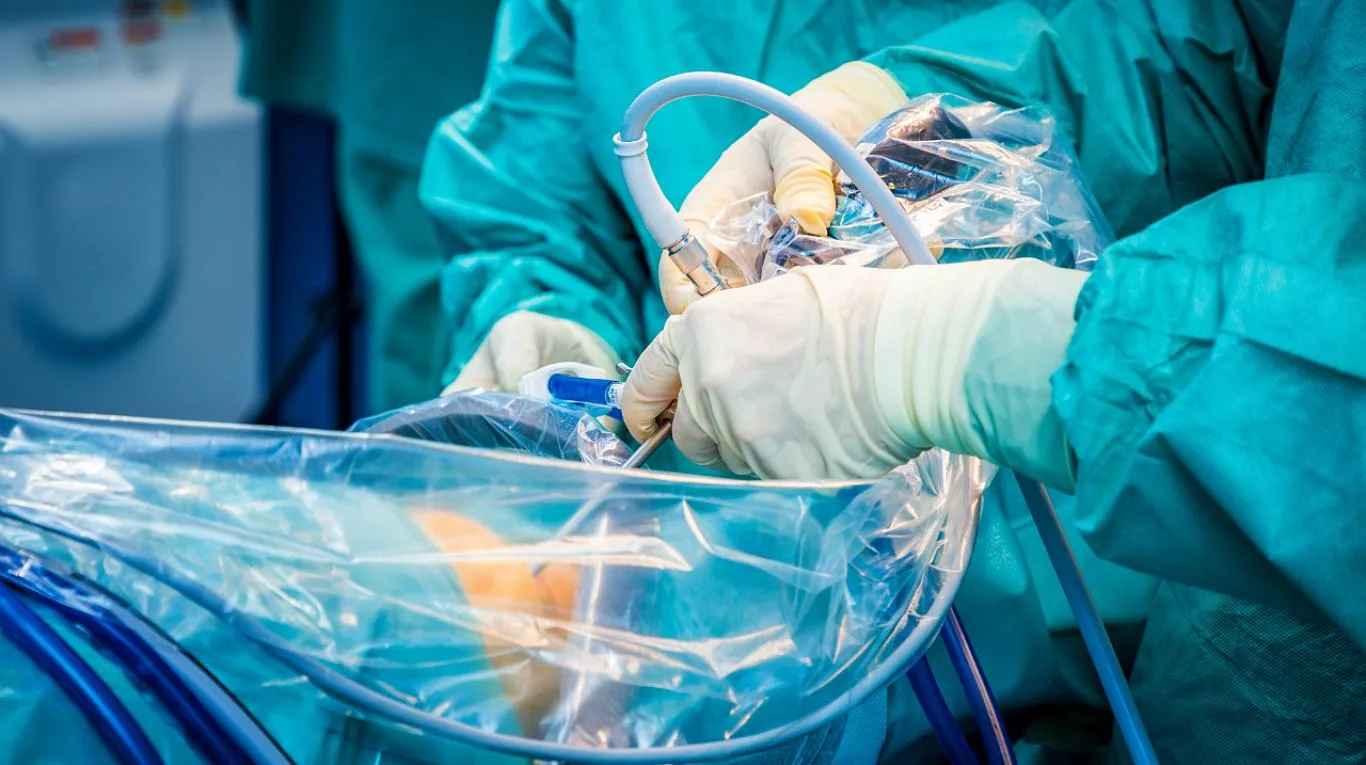
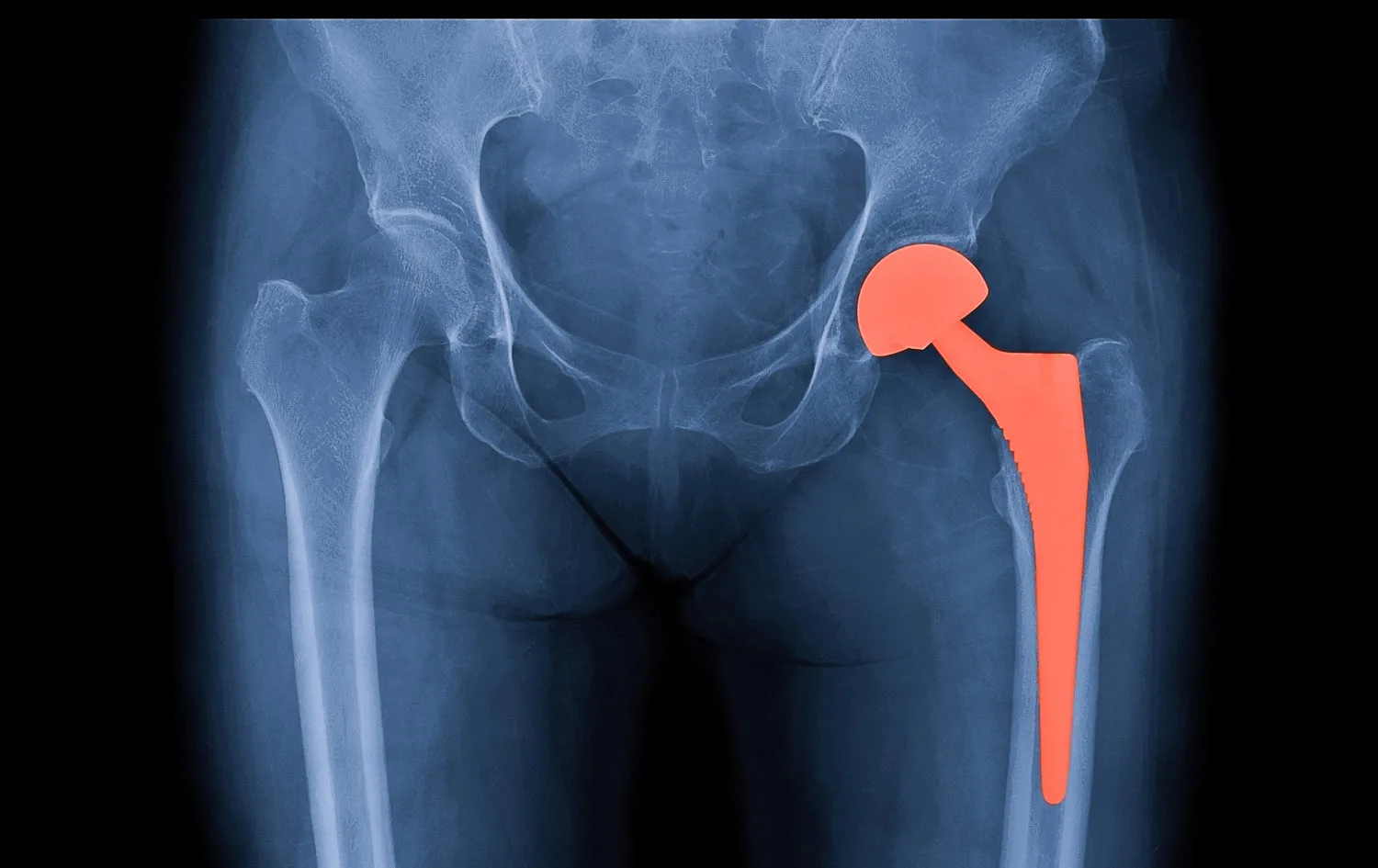
A prosthesis is an artificial device designed to replace or reproduce the function of a missing or poorly functioning part of the body. Arthroplasty, also known as joint replacement surgery, is a surgical procedure in which severely damaged joint surfaces are replaced with artificial implants to reduce pain and restore function.
Joint prostheses should not be confused with external prosthetic limbs used after an amputation. In joint replacement surgery, implants are placed inside the body to replace the function of damaged joint surfaces.
During arthroplasty, the severely damaged joint surfaces are carefully prepared, and the worn cartilage together with a small amount of underlying bone is removed. Artificial components made of metal, ceramic, or specialized plastic materials are then implanted. Depending on the type of joint replacement, these components may be fixed to the bone with or without bone cement.
The goal of surgery is to create a new, functional joint surface that reduces pain, improves mobility, and helps the patient return to daily activities more comfortably.
Joint replacement surgery is one of the most commonly performed and successful procedures in modern orthopedics and traumatology.
Which Joints Can Be Replaced?
Today, many joints can be replaced surgically. The most commonly replaced joints are the hip and knee joints.
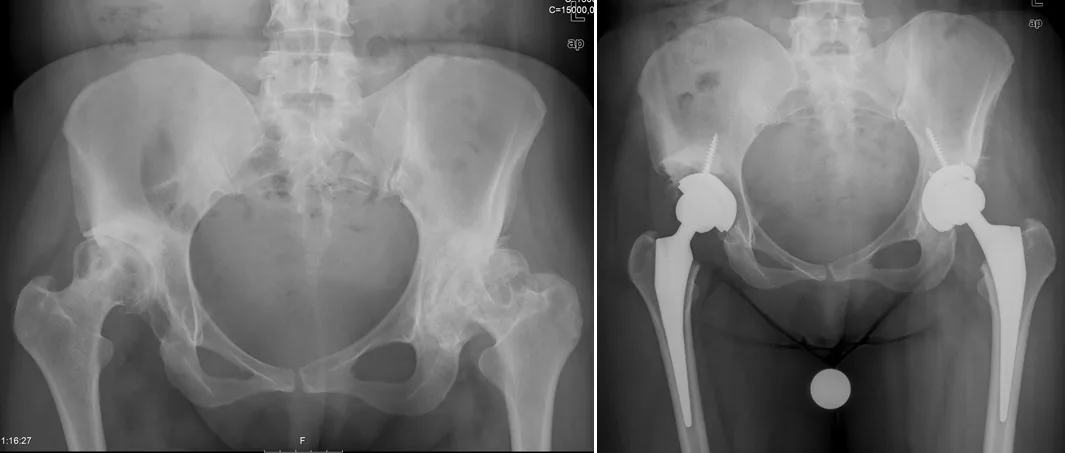
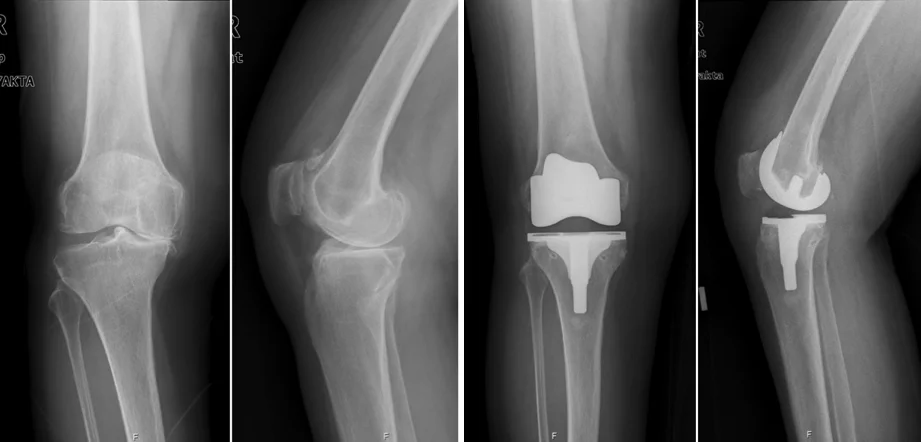
In selected patients, joint replacement may also be performed in the:
- shoulder,
- elbow,
- ankle,
- wrist,
- and certain finger joints.
In the spine, artificial disc replacement procedures may also be used in selected cases to replace a damaged intervertebral disc.
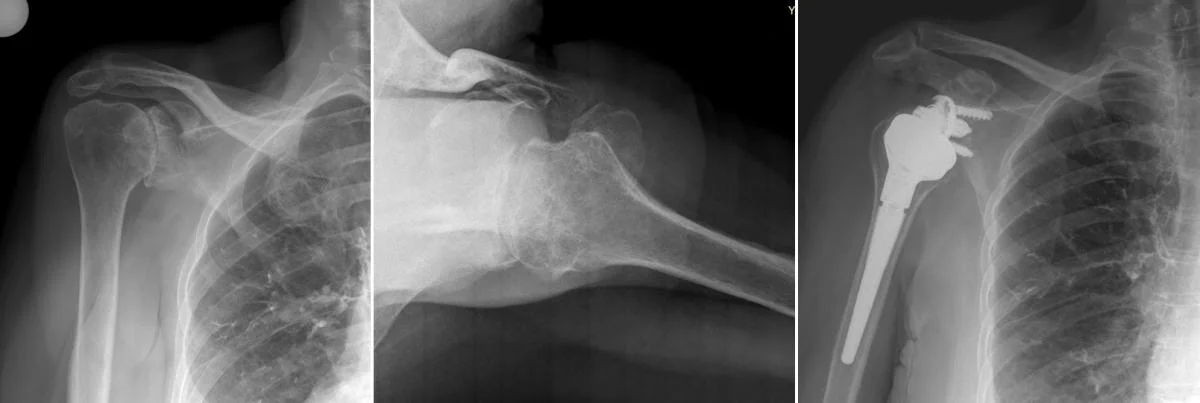
Which Conditions May Require Joint Replacement Surgery?
The most common reason for joint replacement surgery is osteoarthritis, often referred to as wear-and-tear arthritis.
In osteoarthritis, the cartilage covering the joint surfaces gradually wears down. As the condition progresses, changes may also develop in the underlying bone, leading to pain, stiffness, deformity, and loss of function.
Patients may experience:
- joint pain,
- restricted movement,
- difficulty walking,
- difficulty going up or down stairs,
- limitations in daily activities,
- and, in advanced cases, deformity of the joint.
In addition to osteoarthritis, several other conditions can severely damage a joint and may eventually require joint replacement surgery.
These include:
- fractures involving the joint surface,
- previous joint trauma,
- rheumatoid arthritis and other inflammatory joint diseases,
- congenital or developmental joint disorders,
- deformities that alter normal joint alignment,
- osteonecrosis, in which the blood supply to part of the bone is impaired,
- and other joint conditions causing severe and persistent pain and loss of function despite appropriate treatment.
What Symptoms Are Common in Patients Who May Need Joint Replacement?
The decision to perform joint replacement surgery is not based on X-rays or MRI findings alone. The patient's symptoms, functional limitations, and expectations are equally important.
The most common symptom is pain.
In the early stages, pain may occur mainly after prolonged walking, climbing stairs, or strenuous physical activity. As the disease progresses, even shorter walking distances may become painful.
In more advanced stages, patients may experience:
- pain at rest,
- night pain,
- significant loss of joint movement,
- reduced walking distance,
- difficulty using stairs,
- difficulty sitting down or standing up,
- and visible deformity of the joint.
An important factor in decision-making is therefore not only the appearance of the joint on imaging studies but also the extent to which the condition affects the patient's quality of life.
What Treatments Can Be Tried Before Joint Replacement Surgery?
Not every patient with osteoarthritis requires joint replacement surgery.
Treatment usually begins with a careful assessment of the cause of the pain and the severity of joint damage. Especially in the early and intermediate stages, nonsurgical treatment options are generally preferred.
These may include:
- modification of daily activities,
- appropriate exercise programs,
- physical therapy,
- strengthening of the muscles around the joint,
- weight loss in patients who are overweight,
- and, when appropriate, pain-relieving and anti-inflammatory medications.
In selected patients, injections into the joint may also be considered. These may include corticosteroid injections or hyaluronic acid injections. Biological treatments such as platelet-rich plasma (PRP) may also be considered in selected cases.
The benefits of these treatments vary depending on the patient, the joint involved, and the stage of the disease. The most appropriate treatment should therefore be individualized.
Some patients also use supplements such as glucosamine and chondroitin. Their effects may vary from person to person, and patients should discuss their use with their physician.
As joint damage progresses, nonsurgical treatments may become less effective.
Depending on the patient's age, activity level, location, and severity of joint damage, surgical options may include:
- arthroscopic procedures,
- corrective osteotomies,
- or joint replacement surgery.
Joint replacement is generally considered when the joint is severely damaged, pain and functional limitation significantly interfere with daily life, and appropriate nonsurgical treatments no longer provide sufficient relief.
Is There an Ideal Age for Joint Replacement Surgery?
There is no strict minimum or maximum age for joint replacement surgery.
In younger patients, every effort is generally made to preserve the natural joint. This is because, although modern implants can last for many years, no artificial joint can be guaranteed to function without problems for an entire lifetime.
Advances in implant design, materials, and surgical techniques have made it possible to perform joint replacement in younger patients when clearly indicated.
Similarly, advanced age alone does not necessarily prevent surgery.
The decision depends on several factors, including:
- the patient's overall health,
- other medical conditions,
- degree of functional limitation,
- severity of pain,
- activity expectations,
- and the likely benefit of surgery.
For this reason, overall health and quality of life are often more important than chronological age alone.
How Are Patients Evaluated Before Joint Replacement Surgery?
Before surgery, both the affected joint and the patient's general medical condition are carefully assessed.
Particular attention is paid to conditions such as:
- diabetes,
- high blood pressure,
- heart and vascular diseases,
- lung disease,
- kidney disease,
- and other chronic medical conditions.
Obesity may also increase the risk of certain complications, including infection, wound-healing problems, and blood clots.
The goal of preoperative assessment is therefore to identify and, whenever possible, optimize medical conditions before surgery.
What Happens Before Surgery?
Once the decision to proceed with surgery has been made, the patient is evaluated by the anesthesia team.
It is important for patients to inform their doctors about all medications they are taking. Particular attention should be paid to blood-thinning medications, blood pressure medications, diabetes medications, thyroid medications, and any other regularly used treatment.
Depending on the patient's health status, preoperative testing may include:
- blood tests,
- electrocardiography (ECG),
- assessment of the lungs,
- and other investigations when necessary.
Additional consultations with cardiology, pulmonology, internal medicine, or other specialties may also be requested when appropriate.
What Type of Anesthesia Is Used?
Joint replacement surgery can be performed under general anesthesia, spinal anesthesia, or other regional anesthesia techniques, depending on the patient and the type of surgery.
The most appropriate method is selected by the anesthesia team based on the patient's overall health and the planned procedure.
Several methods are also available for postoperative pain control, including medications and regional nerve blocks.
When Can Patients Start Walking After Surgery?
Modern joint replacement protocols aim to mobilize patients as early as safely possible.
If the patient's general condition allows, standing and walking with a walker or crutches usually begin within the first days after surgery.
The amount of weight that can be placed on the operated limb depends on:
- the type of implant,
- the surgical technique,
- bone quality,
- and the surgeon's assessment.
In many hip and knee replacement procedures, early weight bearing is possible, although rehabilitation is not identical for every patient.
Patients are also taught exercises to improve joint motion and strengthen the surrounding muscles.
Physical therapy and rehabilitation support may be recommended when necessary.
How Are Blood Clots Prevented?
Blood clot formation in the deep veins, known as deep vein thrombosis (DVT), is an important potential complication, particularly after hip and knee replacement surgery.
Depending on the patient's individual risk, preventive measures may include:
- blood-thinning medication,
- early mobilization and walking,
- leg exercises,
- and, in some patients, mechanical compression methods.
The duration of preventive treatment is individualized according to the patient and the type of operation.
When Can Patients Leave the Hospital?
The length of hospital stay varies depending on the patient's general health, the type of surgery, and early mobility.
Patients may be discharged when:
- pain is adequately controlled,
- they can stand and walk safely,
- they are able to perform essential daily activities,
- and they are medically stable.
Early discharge is possible for many patients today, although some patients may require a longer hospital stay.
What Should Patients Pay Attention to After Discharge?
At home, patients should continue the exercises taught during their hospital stay and use the recommended walking aids.
Wound care instructions should be followed carefully. The timing of dressing removal, showering, and suture removal may vary depending on the type of dressing and sutures used.
After hip replacement surgery, certain movements may need to be restricted for a period of time depending on the surgical approach and the individual case. For this reason, the same precautions do not apply to every patient.
Follow-up schedules also vary. Patients are commonly reviewed during the early postoperative period and then around 6 weeks, 3 months, 6 months, and 1 year after surgery. Longer-term clinical and radiographic follow-up may also be recommended.
When Should a Patient Contact the Doctor Urgently?
Patients should contact their healthcare team promptly if any of the following occur:
- unexpectedly severe or increasing pain,
- high fever,
- redness or marked swelling around the wound,
- wound drainage,
- foul-smelling discharge,
- sudden swelling or pain in the leg,
- shortness of breath,
- chest pain,
- inability to place weight on the operated limb,
- or a sudden and significant change in joint movement.
Sudden shortness of breath or chest pain may require urgent medical assessment.
Can Patients Have an MRI After Joint Replacement?
Most modern joint replacement implants are manufactured with modern medical imaging in mind.
However, before undergoing an MRI scan, patients should always inform the radiology team that they have a joint implant.
Keeping the implant card or information about the type of prosthesis used can be helpful.
Joint implants may also trigger metal detectors at airports or other security checkpoints. In such situations, informing security personnel that a joint replacement is present is usually sufficient.
What Are the Risks of Joint Replacement Surgery?
As with any surgical procedure, joint replacement surgery carries certain risks.
Potential complications include:
- infection,
- blood clot formation,
- bleeding,
- wound-healing problems,
- joint stiffness,
- dislocation,
- wear or loosening of the implant over time,
- and, in some patients, persistent pain despite otherwise satisfactory findings.
Infection
Infection around a joint replacement is a serious but relatively uncommon complication.
Measures to reduce the risk include ensuring that the patient has no active infection elsewhere in the body, maintaining appropriate operating room conditions, and using preventive antibiotics.
Despite all precautions, the risk of infection cannot be completely eliminated.
Blood Clots
After hip or knee replacement surgery, blood clots may develop in the deep veins of the leg.
A piece of the clot can occasionally travel to the lungs and cause a pulmonary embolism, which is a potentially serious condition.
Early mobilization and appropriate blood-thinning medication help reduce this risk.
Mechanical Problems Related to the Implant
Over time, joint replacements may develop problems such as:
- wear,
- loosening,
- dislocation,
- or changes in the bone surrounding the implant.
In some cases, these problems may require revision surgery, in which part or all of the joint replacement is replaced.
How Long Does a Joint Replacement Last?
Modern joint replacements are designed to function for many years.
The lifespan of an implant depends on several factors, including:
- the patient's age,
- body weight,
- activity level,
- bone quality,
- type of implant,
- surgical technique,
- and the amount of mechanical stress placed on the joint over time.
Many modern joint replacements can function successfully for well beyond 15 to 20 years. However, no implant can be guaranteed to last for a lifetime.
For appropriately selected patients, successful joint replacement surgery can significantly reduce pain, improve mobility, and enhance quality of life.
Before surgery, patients should be fully informed about the expected benefits, limitations, possible risks, and postoperative recovery process.
Successful joint replacement surgery depends particularly on three key factors:
The right patient, the right surgical plan, and the right surgical technique!!!