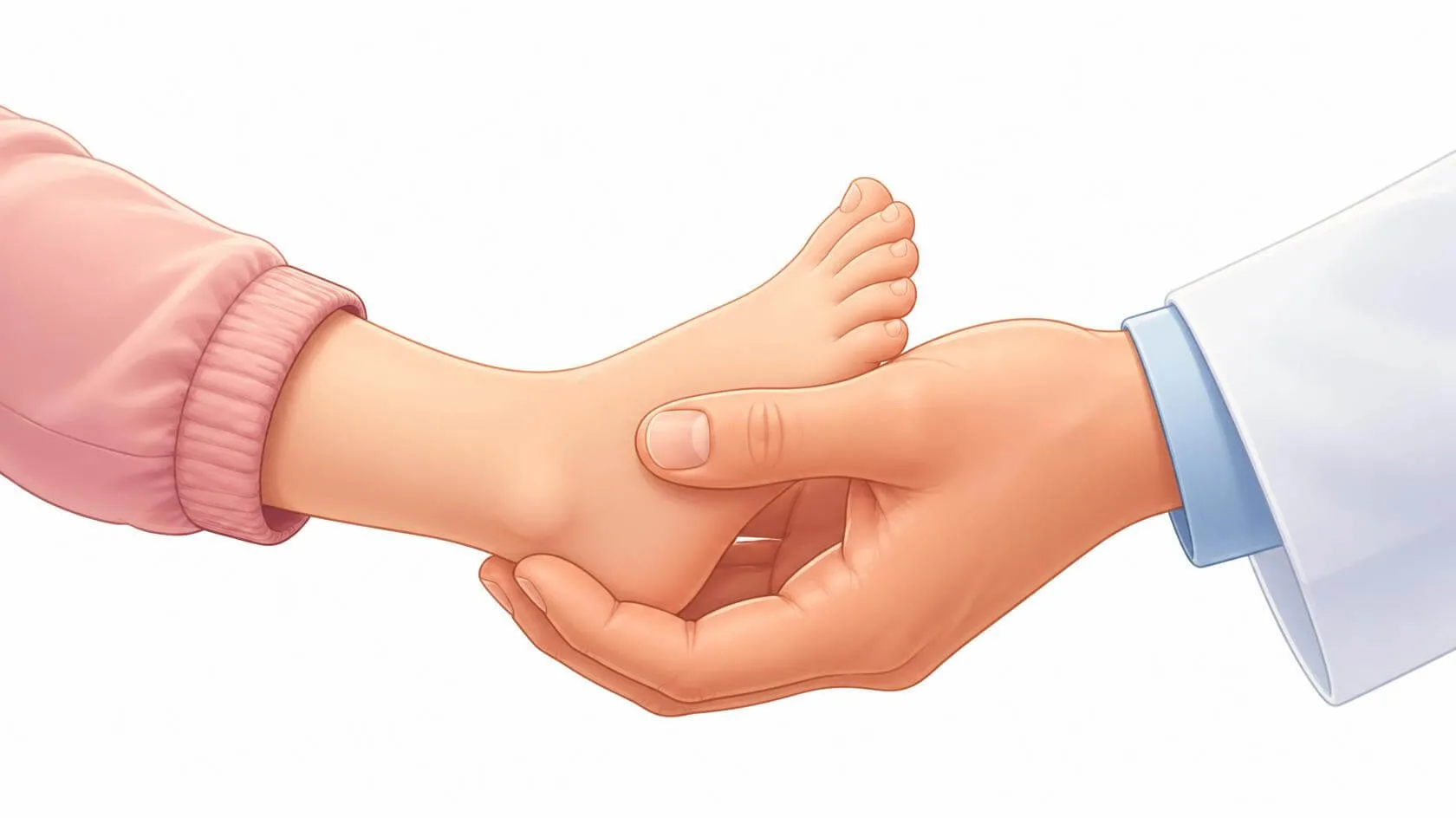
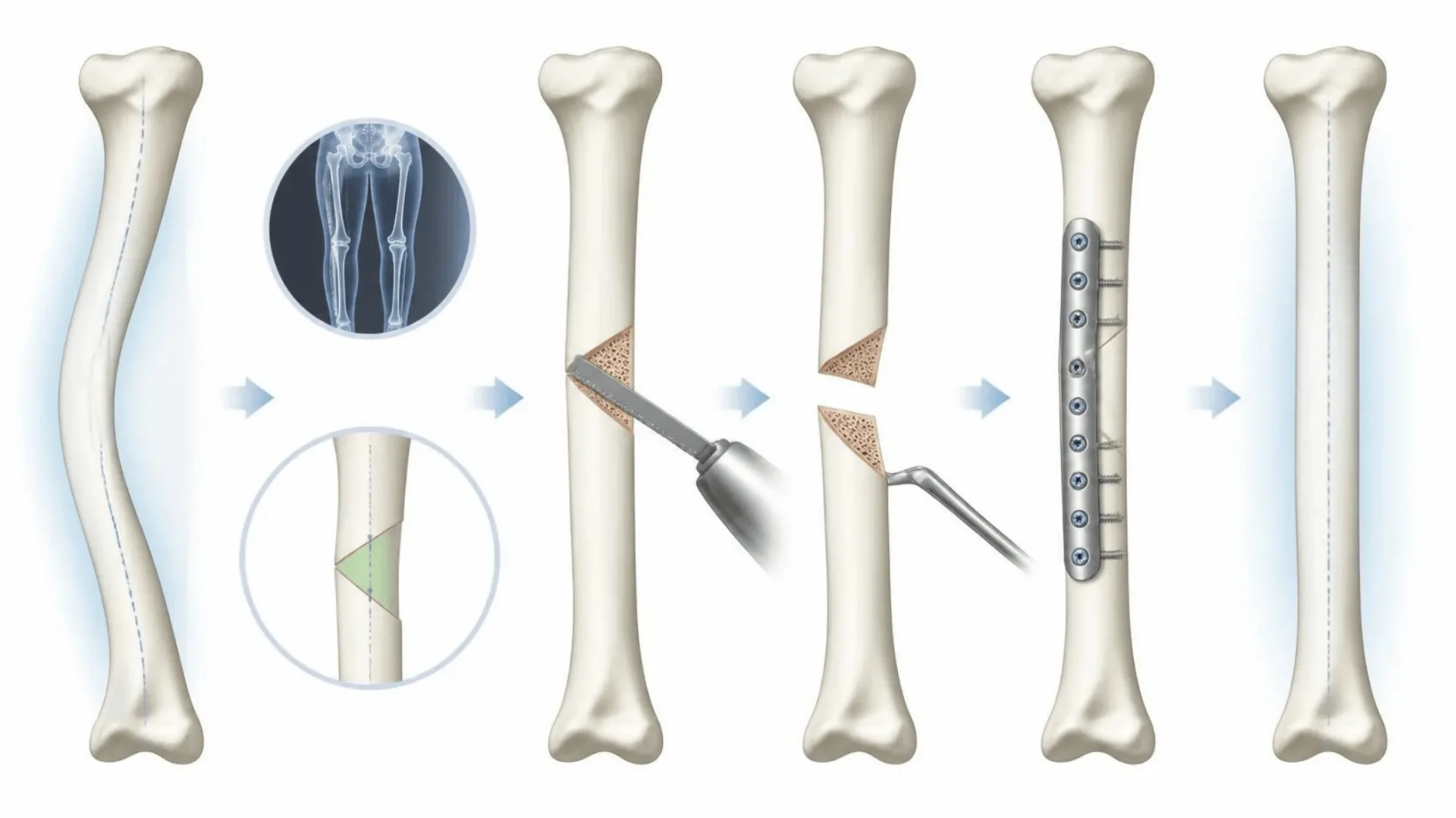
Deformity correction is a treatment performed when arm or leg bones deviate from their normal alignment, length, or rotational orientation. The issue may be congenital or develop following a fracture, infection, or damage to the growth plate.
When is it considered?
Not every curvature requires surgery. Evaluation is necessary if there is pain, a limp, a significant length discrepancy, limited joint mobility, or excessive load on one side of the joints. In particular, inward or outward bowing of the knee can eventually disrupt the load distribution on the hip and ankle.
Treatment approach
In children, if growth is ongoing, growth modulation—without cutting the bone—may suffice. For adults or more pronounced deformities, an osteotomy (controlled cutting of the bone) is planned. Correction can be achieved in a single session or gradually using plates, nails, or external fixators. Bone lengthening is a separate option for specific cases of length discrepancy.
About the process
Planning is based on clinical examination and long-leg radiographs taken while standing. Recovery varies depending on the extent of the correction and the method used. Follow-up and physical therapy are integral parts of the process.
You can schedule an appointment to develop a personalized plan for your alignment issue.