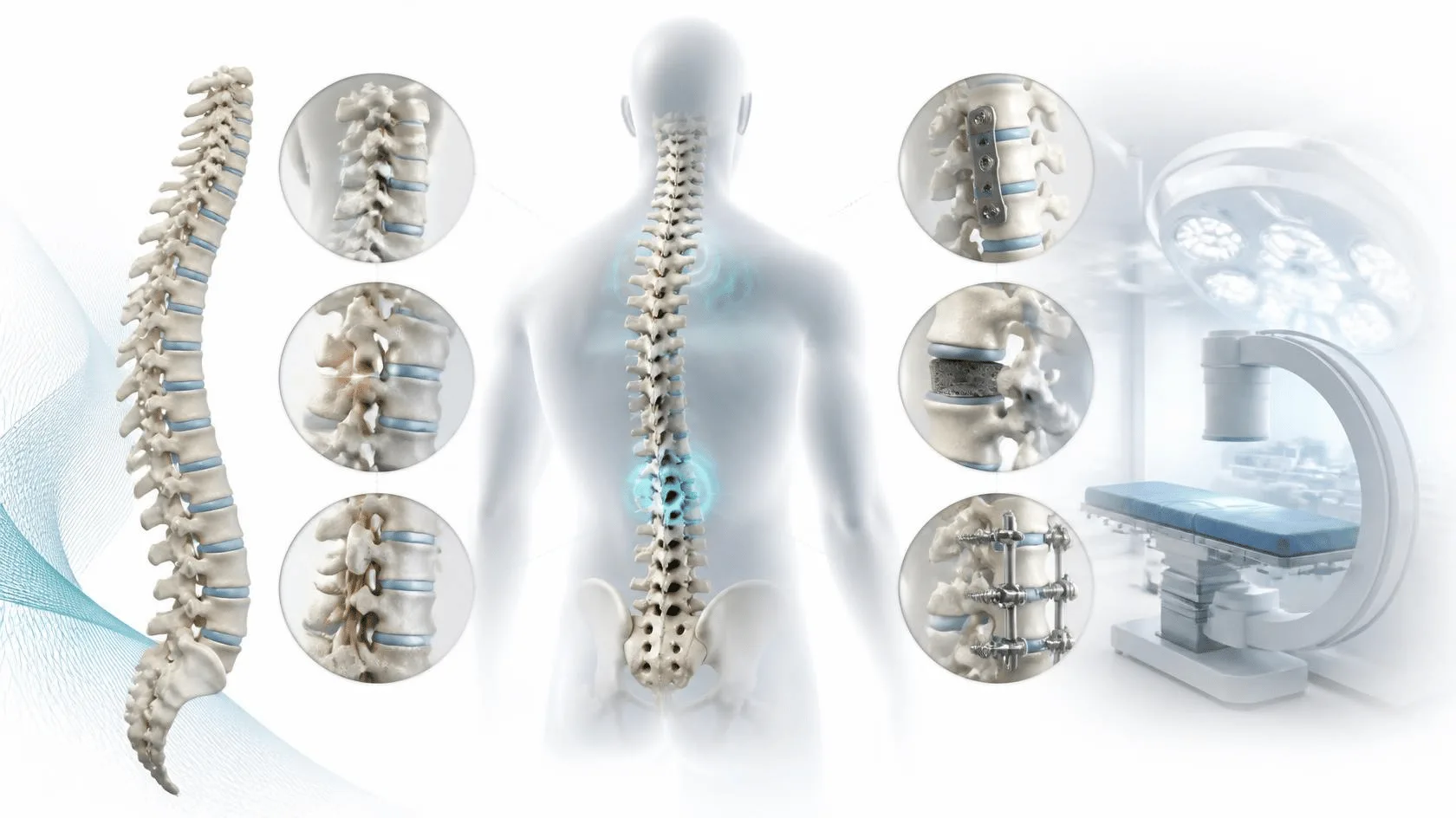
Spine surgery encompasses the evaluation of lower back and neck pain, disc issues, spinal stenosis, spondylolisthesis (slipped vertebrae), and spinal curvatures. The majority of spinal pain stems from muscle strain or age-related changes and does not require surgery.
When is it considered?
A medical examination is necessary if there is pain radiating to the legs or arms, numbness, a reduction in walking distance, loss of hand dexterity, or progressive weakness. Sudden loss of bladder or bowel control, numbness in the genital area, or rapidly progressing bilateral loss of strength require urgent evaluation.
Treatment approach
The initial approach typically involves activity modification, pain management, exercise, and physical therapy. Surgery for conditions such as herniated discs and spinal stenosis is considered in cases of progressive weakness or pain that severely impairs quality of life despite appropriate treatment. For scoliosis, the plan—whether monitoring, bracing, or surgery—is determined based on age, the degree of curvature, and progression.
About the process
Decisions are not based solely on MRI scans; symptoms and physical examination findings are evaluated together. When surgery is required, the goal is to relieve nerve compression and preserve function.
You may schedule an appointment for complaints regarding your lower back, neck, or spine.