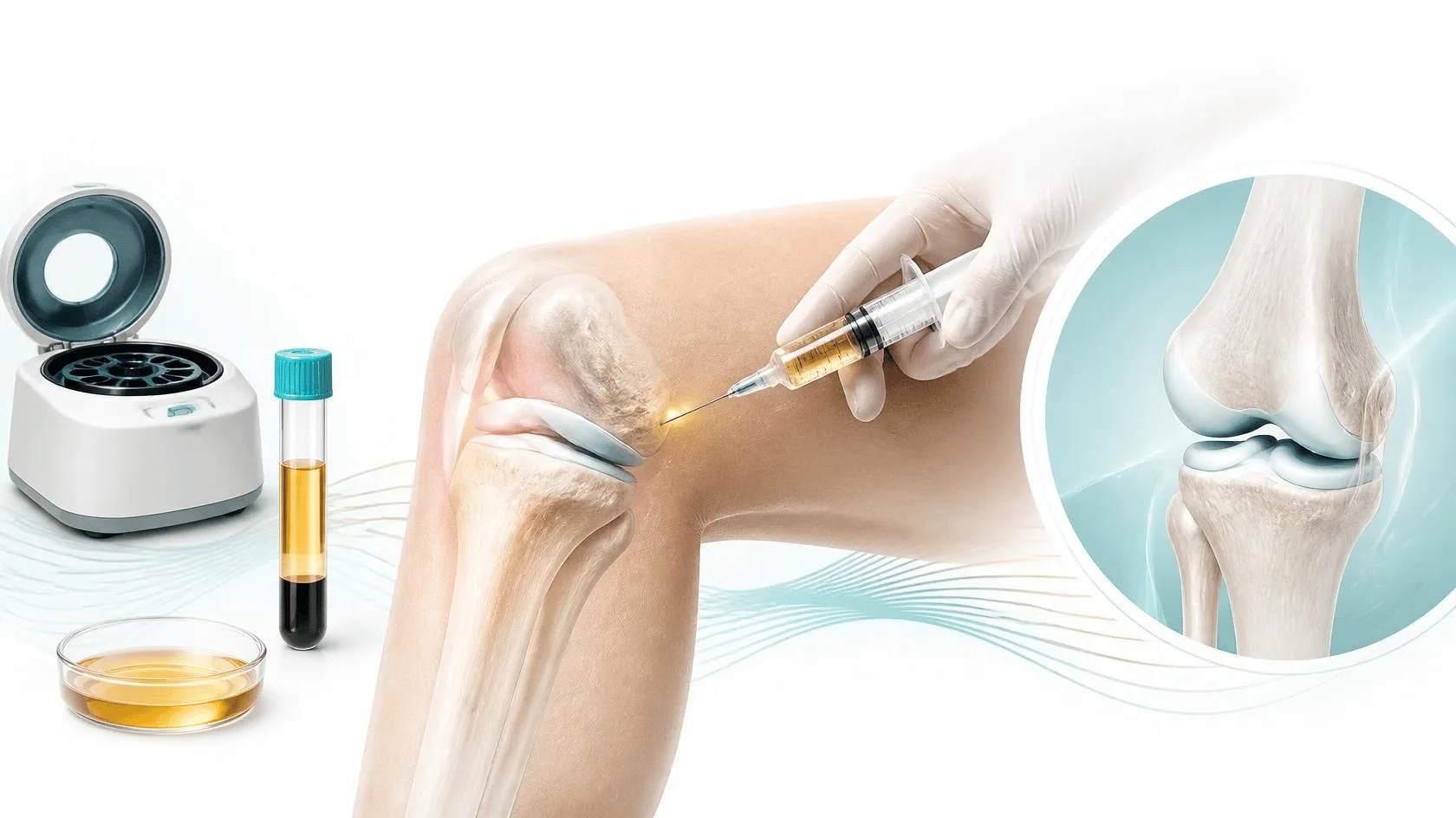
PRP is an injection therapy prepared from the patient's own blood, featuring a high concentration of platelets. It is not a stem cell therapy; no external cells or tissues are introduced.
When is it considered?
It may be considered for mild to moderate knee osteoarthritis, certain chronic tendon issues (such as tennis elbow or patellar tendinopathy), and specific soft-tissue complaints. It should not be expected to regenerate cartilage lost due to advanced osteoarthritis.
Treatment approach
PRP is not a first-line treatment. Exercise, load management, and physical therapy form the foundation of care. When these methods prove insufficient, PRP may be added depending on the stage of the condition. Its effectiveness varies based on the preparation method, the stage of the disease, and the individual patient; results may differ from person to person.
About the process
Blood is drawn, centrifuged, and injected into the affected area during the same session. Hospitalization is not required. Temporary pain or swelling may occur in the initial days. Any significant effect typically becomes apparent over the course of several weeks.
You can schedule an appointment to find out if PRP is suitable for you.